Dusk to Night in Wuzhen: Lanterns, Reflections and a Xizha Travel Guide
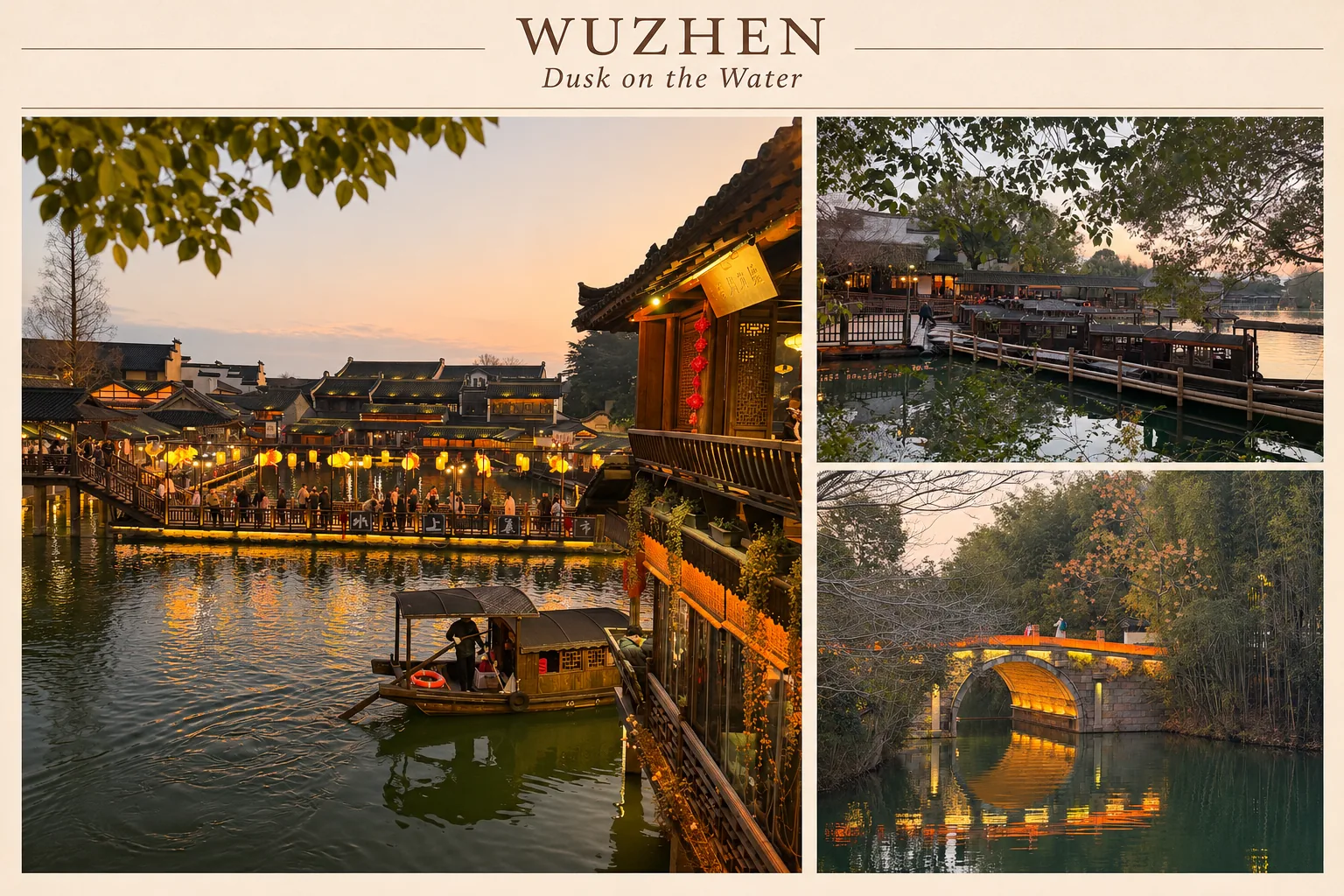
Wuzhen’s Xizha scenic area changed character as the daylight faded. In the late afternoon, I watched a boat cross the water while the first amber lights appeared along the wooden waterfront. After dark, the canals held long, shifting reflections of bridges, windows and lanterns. I had come for an evening walk, and the transition between those two scenes became the part I remember most.
The photographs from this visit trace that change in light. They also show the details that made me slow down: a lantern-filled shop, a tea table by the water and a few personal keepsakes from the lanes.
Dusk on the Water
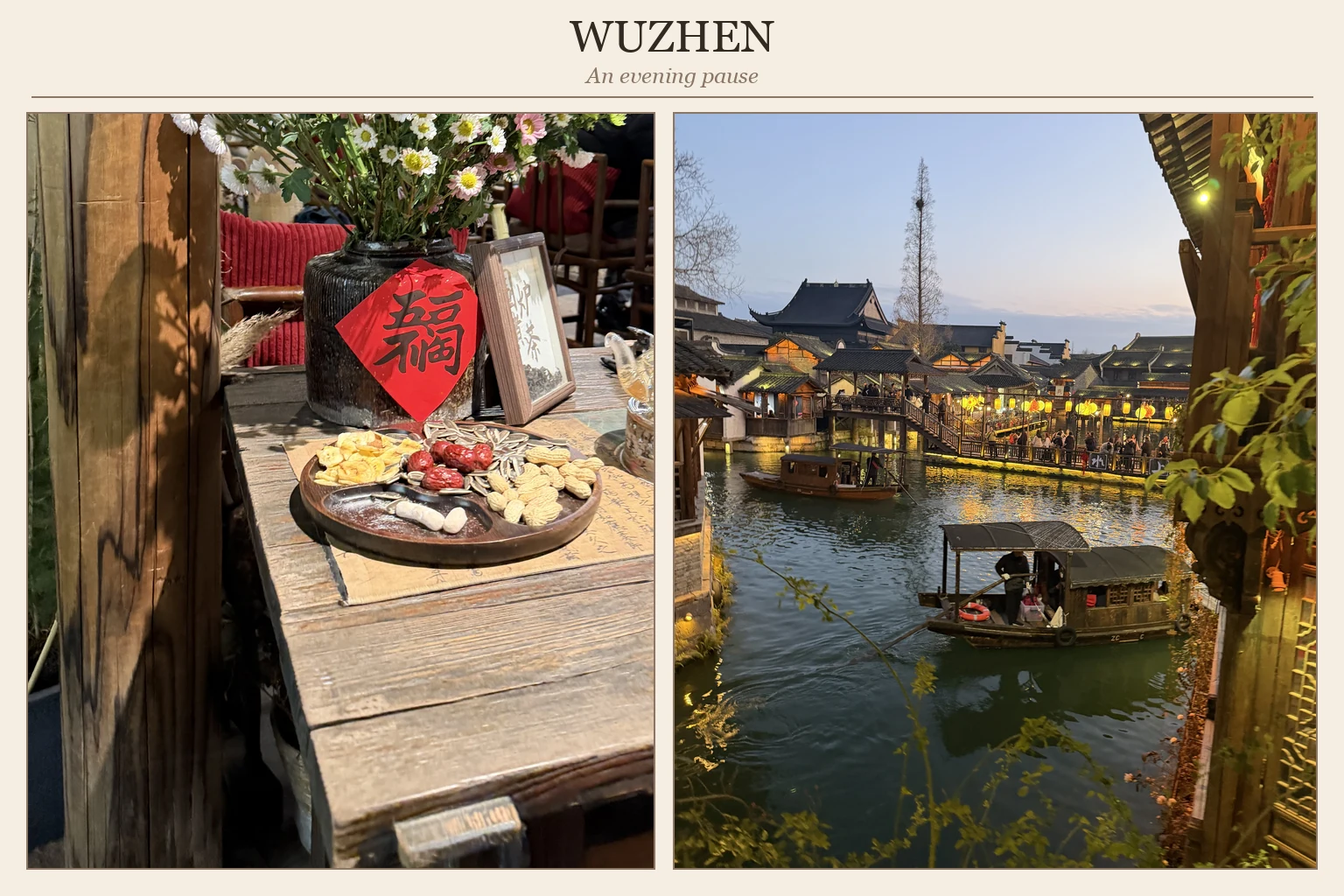
At the water market, the sky was still softly colored when the waterfront began to glow. A traditional boat moved past the boardwalk, leaving ripples in the green canal. From the stone bridge, the view brought together tiled roofs, people along the water and the first points of evening light.
If you want both dusk and the full night scene, give yourself time to arrive before dark. The changing light is part of the experience; it cannot be recreated by arriving only for the illuminated streets.
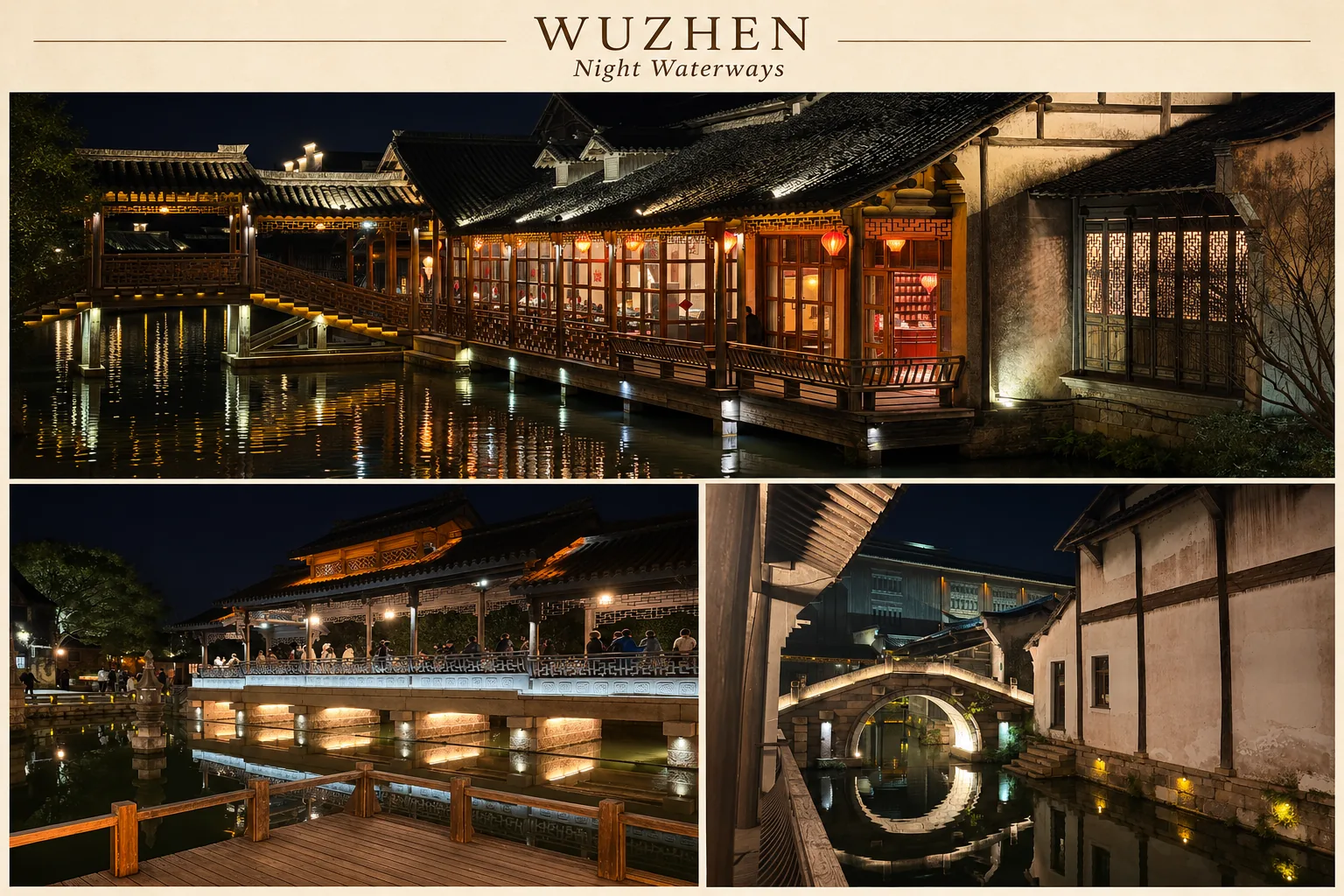
Night Waterways
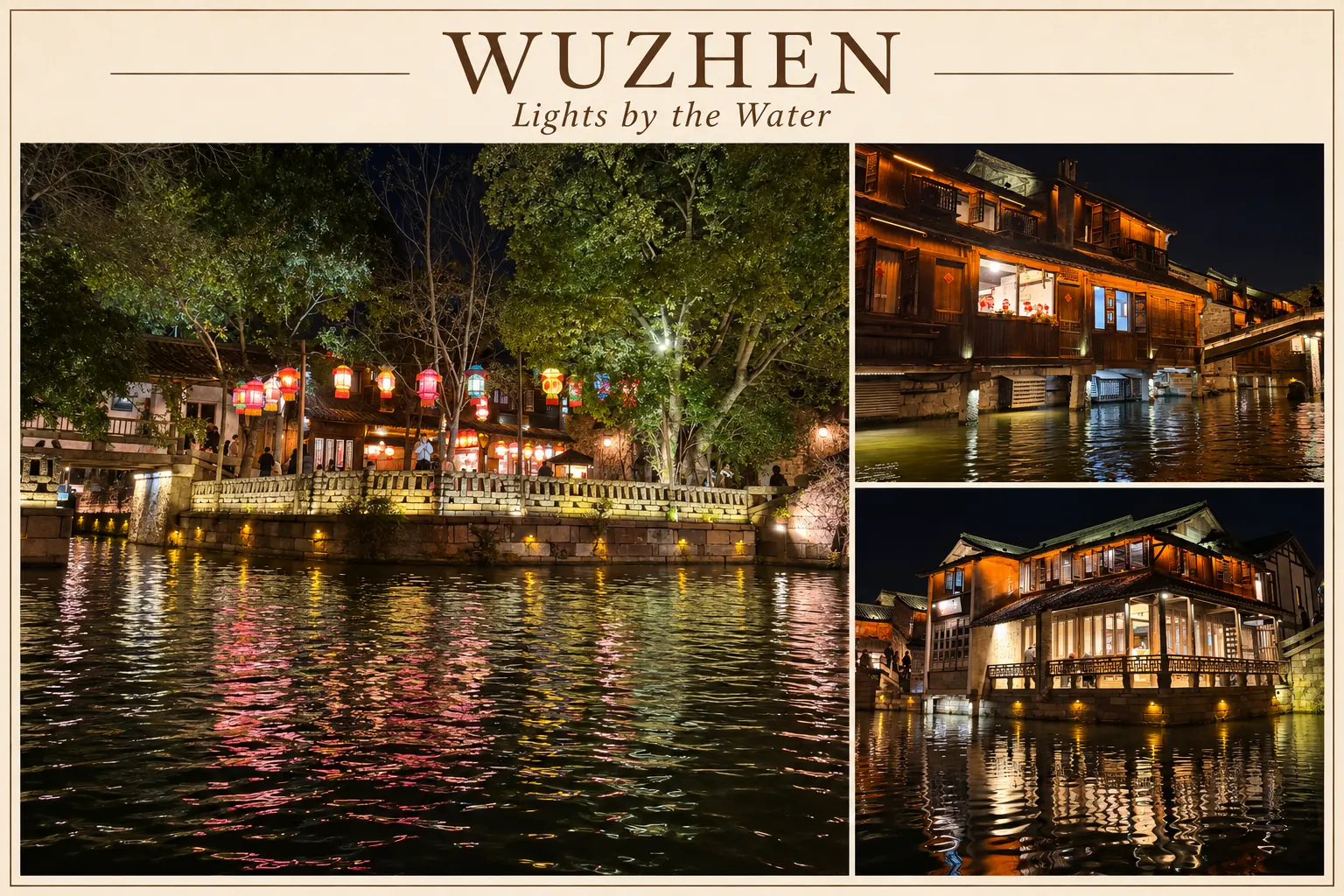
Once night settled over Xizha, lit windows and wooden walkways became the brightest edges of the canal. The water softened each reflection, stretching warm gold below the buildings and bridges. I found myself stopping at the smaller crossings as often as at the busier viewpoints.
The view changes with every boat that passes. A smooth surface may hold a near-perfect reflection for a moment, then break into moving ribbons of light.
Bridges and Reflections
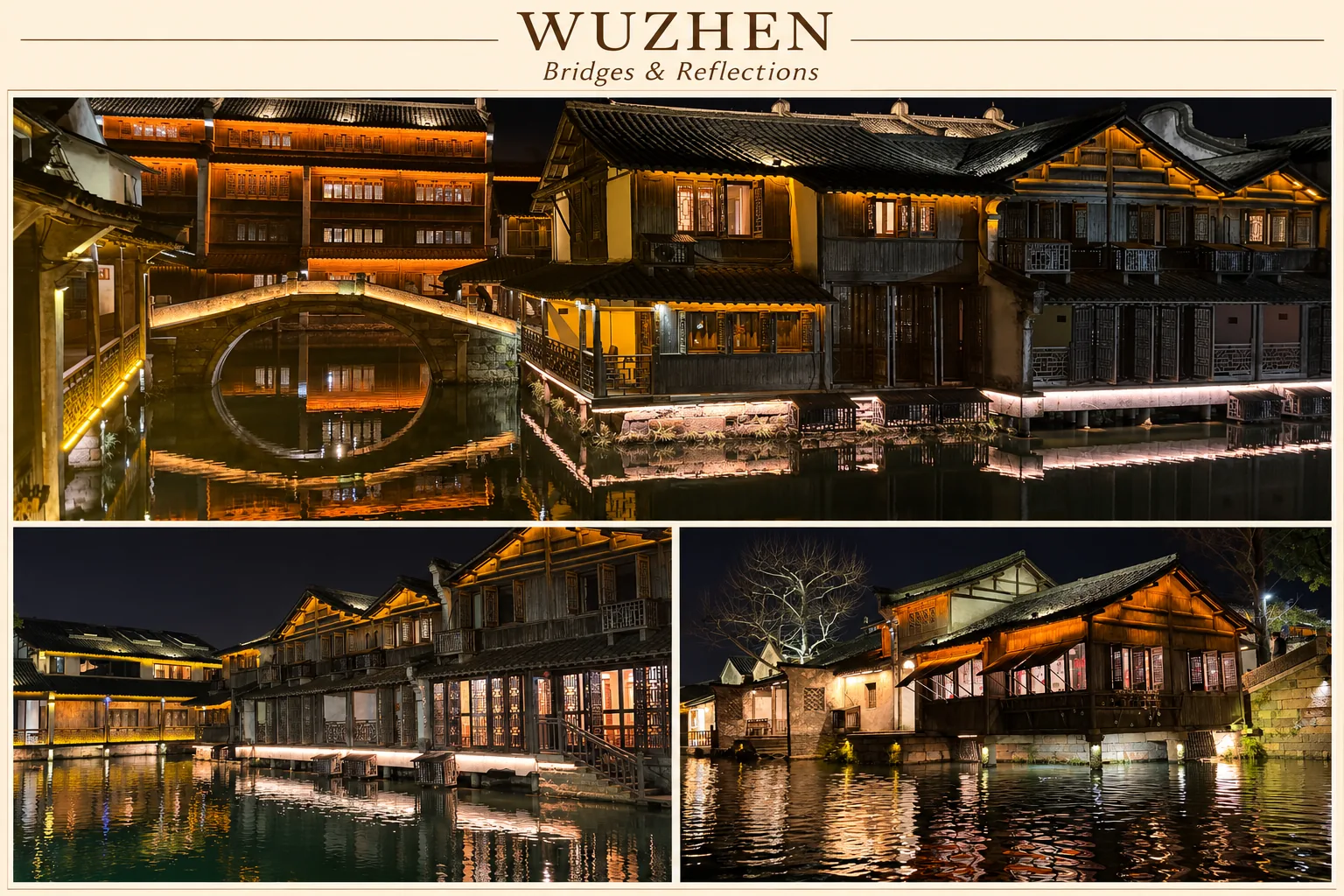
One of the loveliest night views was an arched stone bridge mirrored in the canal. Its illuminated curve and the reflection below suggested a circle, framed by dark walls and trees. Other bridges offered wider views of the waterfront and the people still walking after dinner.
For photographs, I preferred pausing slightly away from the bridge entrance. That gave the water and the architecture room in the frame, while letting other visitors continue across.
Lanterns and Lanes
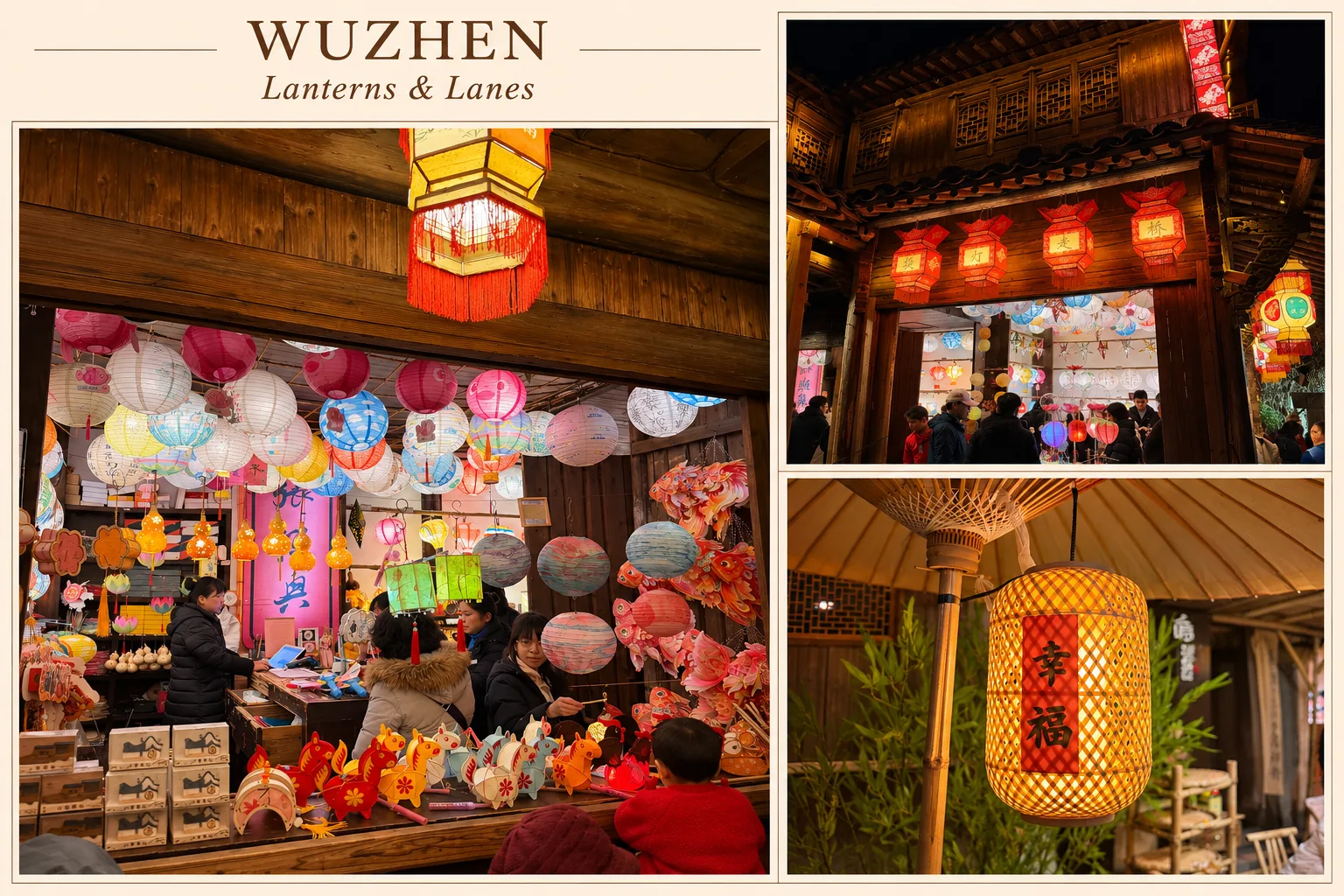
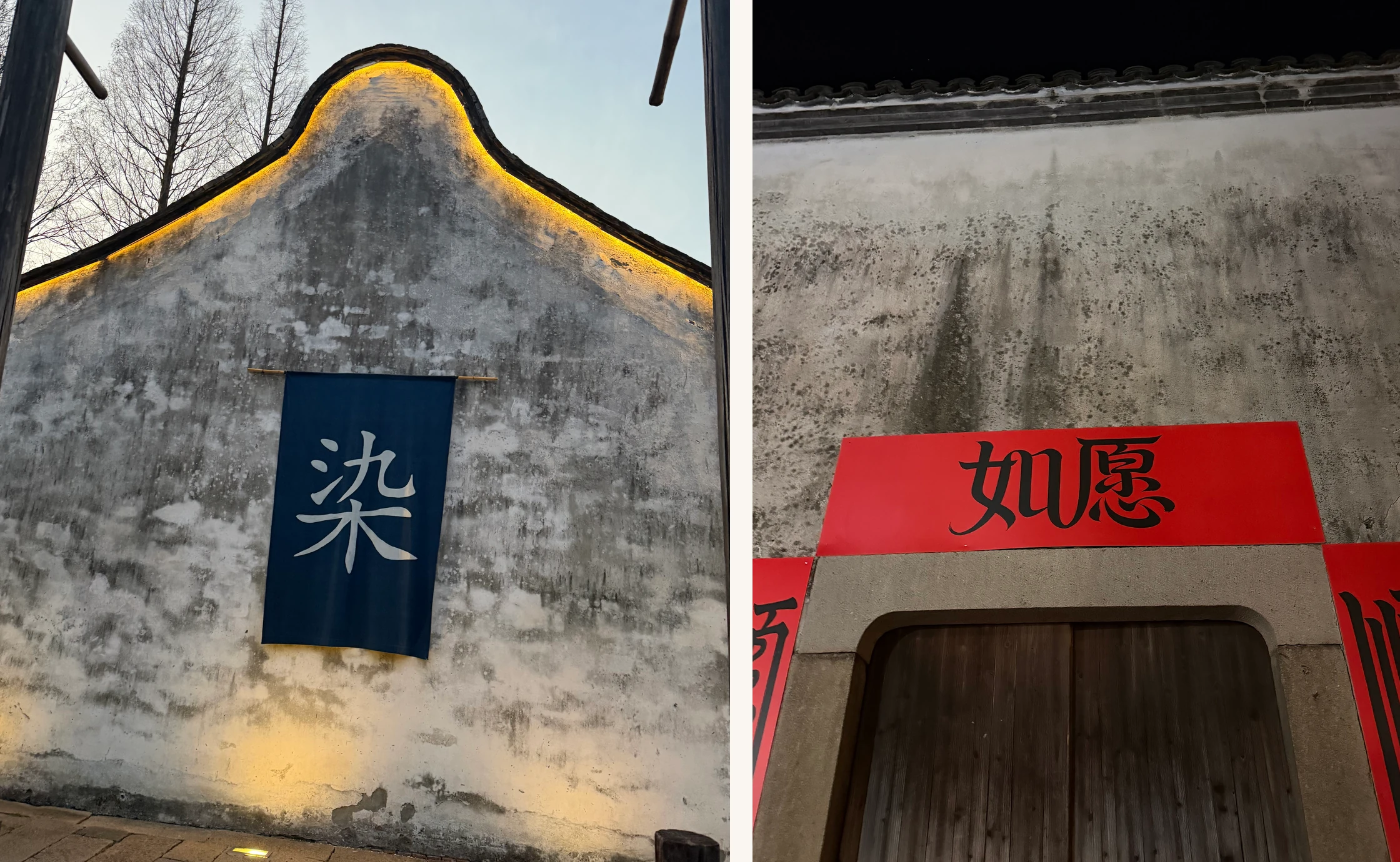
A turn into a side lane brought a different kind of color. Paper lanterns filled a shop from ceiling to counter, with bright shapes and small festive ornaments packed close together. Outside, red lanterns warmed the wooden storefront; a woven bamboo light carried the characters for “happiness.”
The main canal is the obvious draw, but the lanes between waterways are worth exploring slowly. Their shops and lamps bring the evening down to a human scale.
A Pause Beside the Water
I took a break over tea and snacks, with flowers on the table and the water close by. It was a small pause, yet it gave the night a different rhythm after the busy bridges and shops. In my traditional-inspired jacket and tassel hairpins, I felt part of the festive atmosphere without needing an elaborate itinerary.
A waterside table is an appealing place to watch the lights come on. Opening hours and seating vary, so I would treat a particular tea house as a welcome find rather than a fixed stop.
Lights Beyond the Main Street
Farther along the canal, wooden houses and raised walkways sat over the water. Warm interiors shone through open windows, while the dark surface below carried their reflections toward the next bridge. Across the canal, clusters of lanterns added red and pink to the mostly golden night.
These quieter stretches were a reminder to look back as well as forward. A view that seemed ordinary from one side of a bridge could become the most striking scene from the other.
A Wuzhen Keepsake
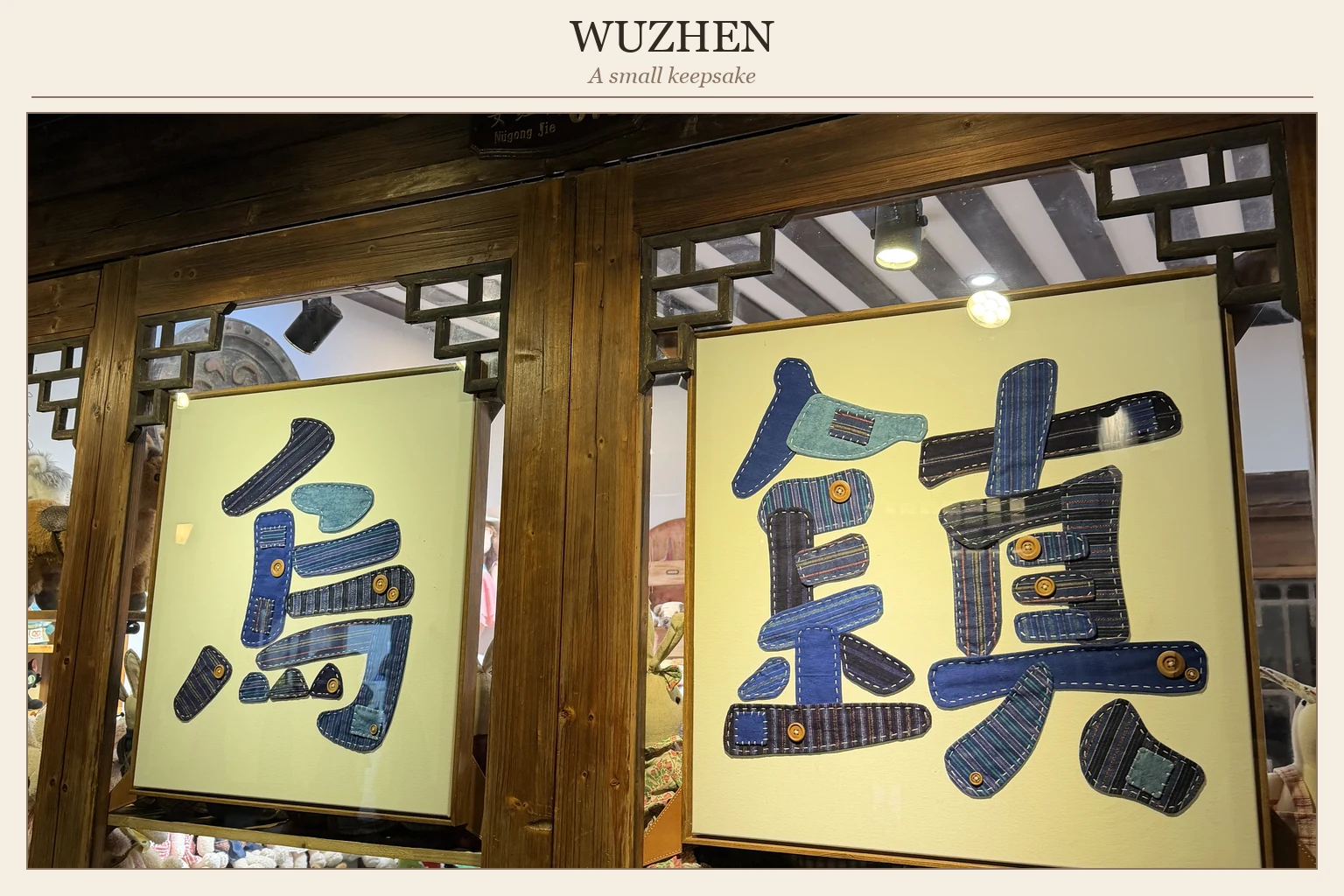
Before leaving, I stopped for a final photograph beside pink flowers and later noticed the playful indigo-style “Wuzhen” display in a shop window. These were modest details beside the grand canal views, but they fixed the evening in my memory.
A beautiful place can be easy to reduce to a checklist. My favorite part of Xizha was the freedom to wander between a broad view of the water and one small, unexpected discovery.
A Flexible Evening Walk Through Xizha
For a first visit, I would enter Xizha in the late afternoon and begin near the waterfront. Follow the canals as the lights come on, pause at bridges for reflections, then explore the lantern shops and side lanes. Leave room for tea or a boat ride if it suits the evening. This is a flexible sequence based on what I enjoyed, not a turn-by-turn route or a promise that every attraction will be open.
If you also want to see the dye house, sauce garden, academy or post office, allow additional daylight and check their current hours before setting out. A night walk is better when there is no pressure to cover every landmark.
Practical Notes for International Visitors
Wuzhen is in Tongxiang, Zhejiang Province, and Tongxiang Railway Station is the rail gateway to check when travelling from Hangzhou or Shanghai. Buy a ticket for your actual date through China Railway 12306 or another booking service and verify the onward transfer to Xizha. Carry the same valid passport used for your train booking; China Railway’s guidance lists foreign passports as accepted documents for online booking.
The official Wuzhen booking page listed the Xizha adult ticket at ¥150 and Xizha hours as 9:00–22:00 when this draft was checked. Prices, hours, boat services and entry arrangements may change. Check the official page again before travel, especially on holidays.
For payments, set up an option that works for you before arrival. Chinese government guidance says international cards can be linked to Alipay and WeChat Pay, while cash and bank cards remain payment options. Bringing a backup method is sensible. Download the maps and translation tools you prefer before setting out, and confirm your mobile data plan for mainland China with your provider.