Tirta Empul Temple: Holy Springs, Melukat and Visiting Respectfully
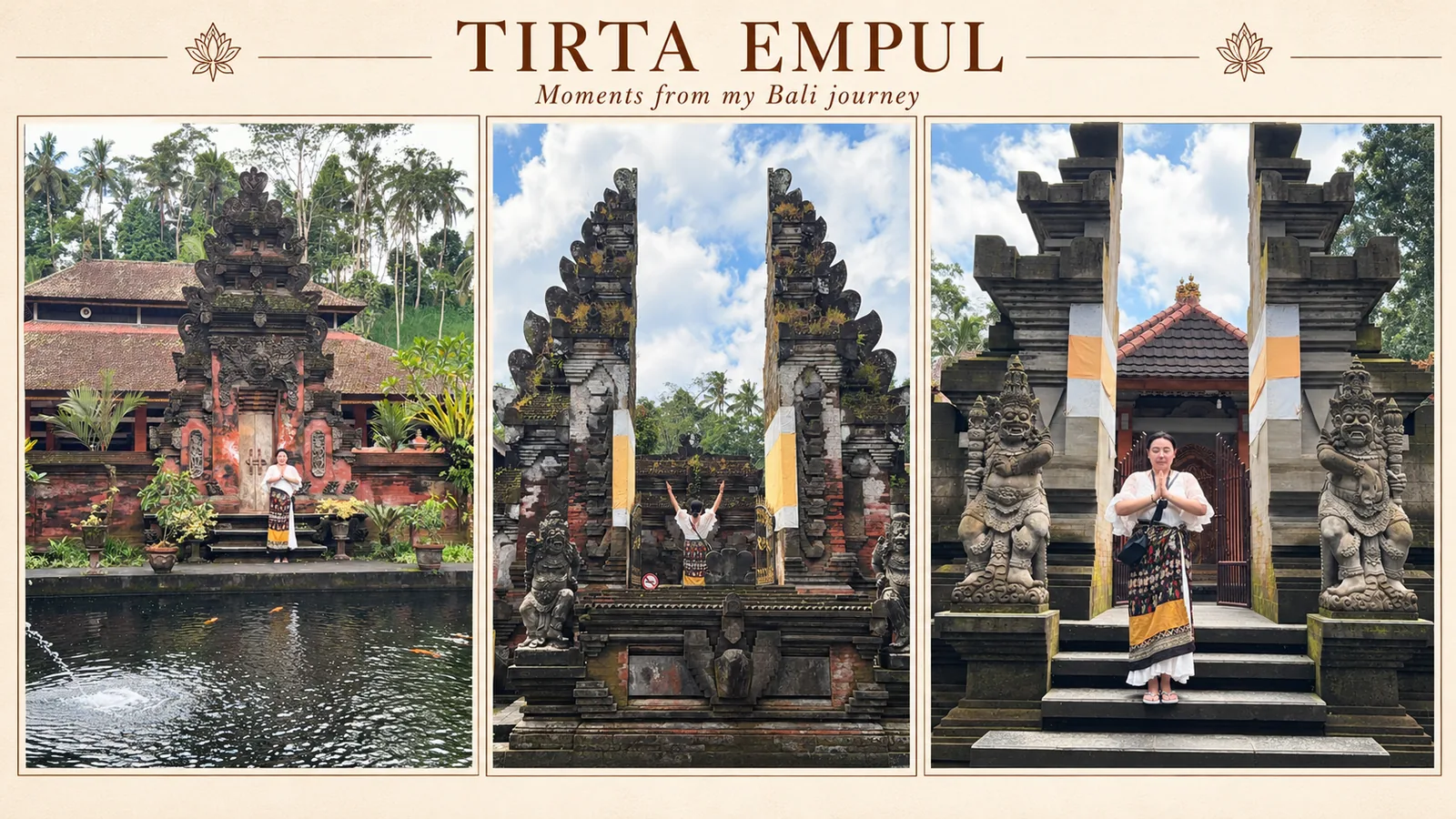
At Tirta Empul, water connects different parts of the visit: the busy purification pools, the reflective spring basin and the koi pond beside the temple buildings. My photographs capture all three, alongside carved gateways, shaded courtyards and a few personal moments from the day.
This is somewhere to approach as an active place of worship, not simply another photo stop on an Ubud itinerary. You can appreciate its architecture and surroundings without making the purification ritual the only focus of your visit.
A Living Water Temple Near Ubud
Pura Tirta Empul stands in the Tampaksiring area of Bali. Its history reaches back to the tenth century, and its natural spring remains central to the temple’s religious significance. The name refers to holy water rising from the ground. These are spiritual associations within Balinese Hindu tradition, rather than promises of a particular outcome for visitors. Indonesia’s official tourism introduction.
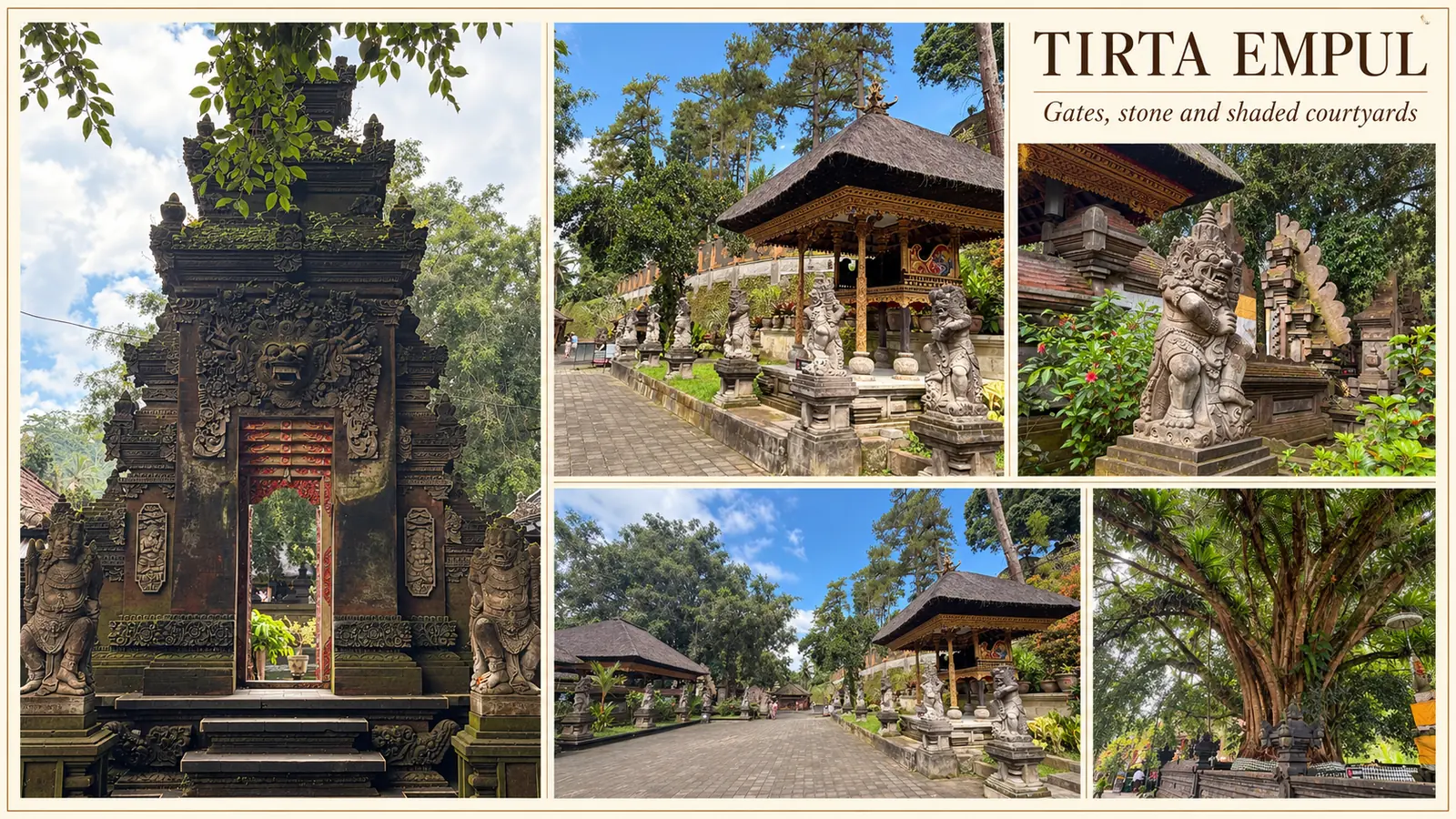
In my photos, the carved stone doorways and guardian figures frame the grounds, while large trees provide shade over parts of the complex. It is worth looking beyond the best-known pool views to notice those architectural details.
The Courtyards and Spring Pools
The temple follows a three-part courtyard arrangement. The outer area leads toward the middle courtyard, Jaba Tengah, where visitors encounter the purification pools; the inner courtyard, Jeroan, has a worship function. Follow signs and staff directions about access rather than assuming every area is open. Official guide to the temple layout.
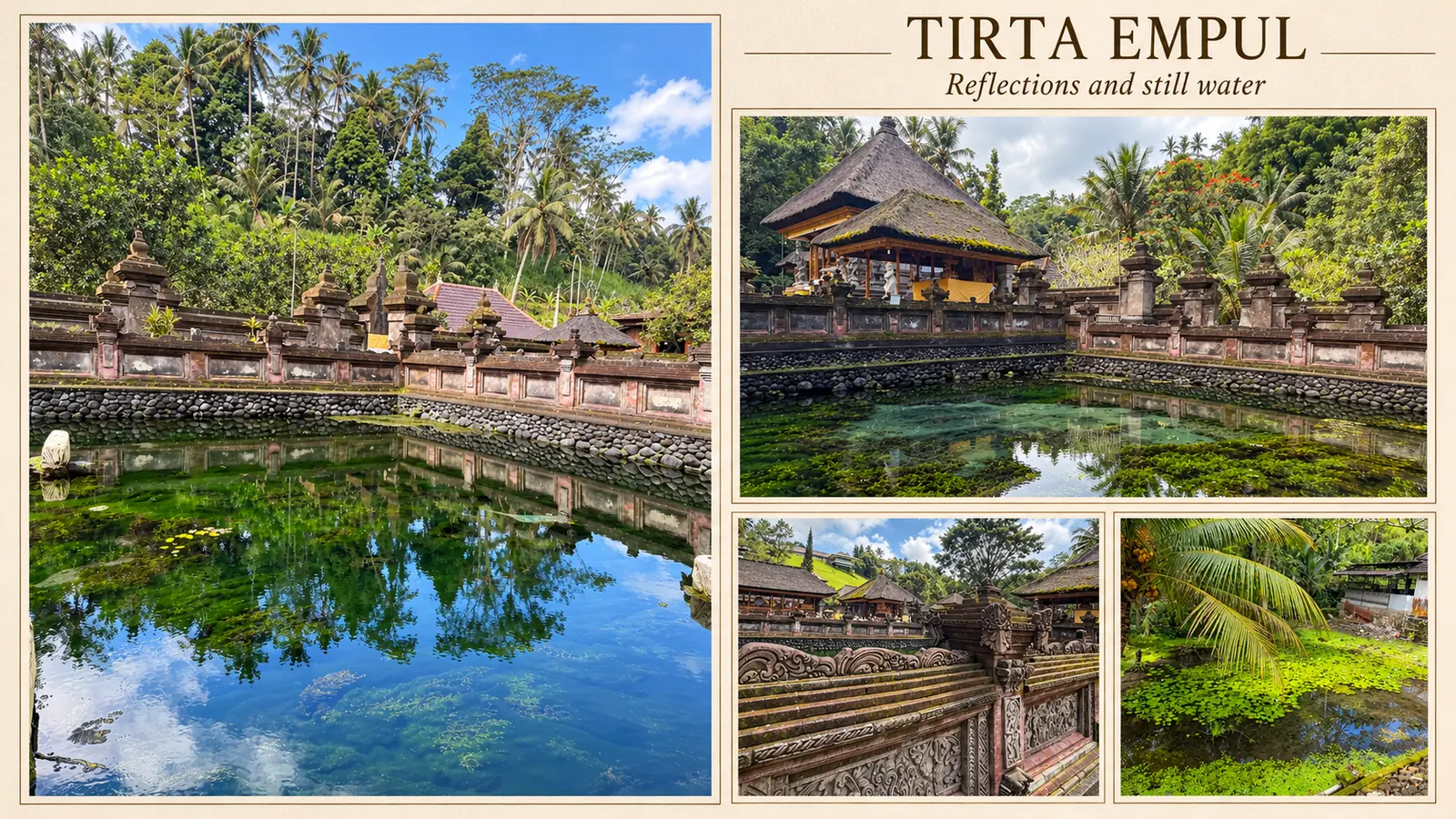
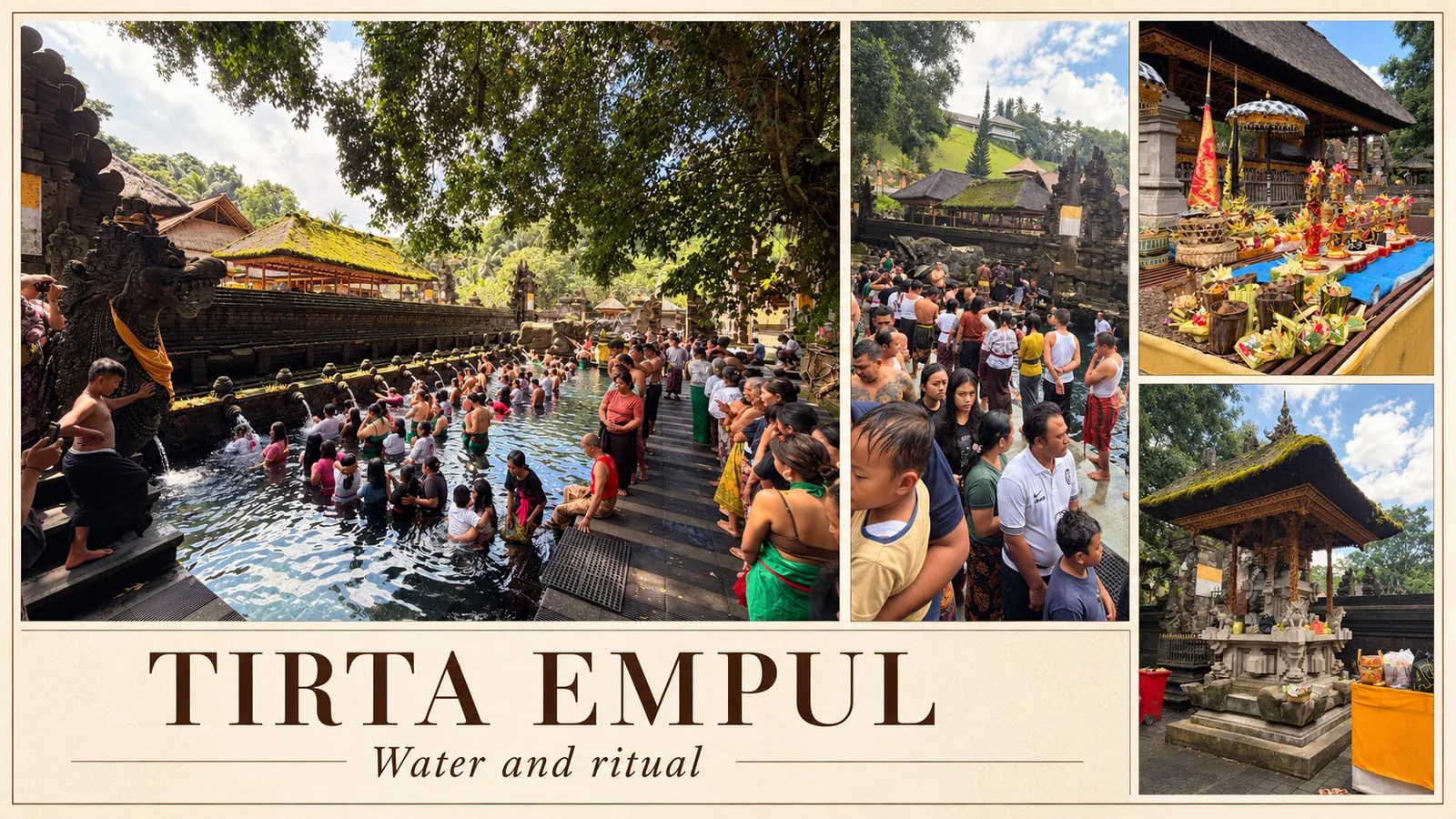
The spring basin and the bathing pools offer different scenes. My photographs of the spring basin show reflections, patches of submerged green growth and the surrounding stonework. In contrast, the purification-pool photographs show people sharing a busy space and waiting their turn beneath the water spouts.
Neither view tells the whole story on its own. Together, they offer a more rounded impression than a single carefully framed photograph.
Understanding Melukat Before Joining
Melukat is a Balinese Hindu purification practice involving sacred water. Visitors may participate subject to temple rules, but an online description should not replace instructions from an appropriate local guide or temple attendant. Some spouts have specific ceremonial uses and are not intended for general participation. Indonesia Travel’s holy-springs guide.
If you want to join, use the following as a preparation checklist rather than a fixed ritual script:
- Ask before entering. Confirm where to change, which clothing is required and which areas are open that day.
- Listen to the explanation. Ask where the sequence begins and which spouts you should avoid. Do not identify them simply by looking for an empty queue.
- Follow the guidance on site. Let the attendant explain the prayer and washing sequence instead of copying nearby visitors or relying on a universal number of repetitions.
- Allow others space. Keep the line moving considerately and avoid turning a shared worship area into an extended photography session.
The photographs supplied for this article do not establish that I completed the full ritual. This section introduces the experience without presenting it as my step-by-step personal account.
What to Wear and Bring
Wear appropriate temple clothing and check the current sarong and sash requirements at the entrance. Clothing suitable for walking around the grounds may not be the same as clothing permitted in the bathing pools. Confirm bathing-sarong arrangements and any separate charges before changing.
If you plan to enter the water, bring a change of clothes, a towel and a bag for your wet personal belongings. Ask how rented garments should be returned rather than packing them away with your clothes.
Check locker availability and fees on arrival. Carry only what you need, and do not treat a locker as a guarantee against loss.
Temple entry and participation rules also include restrictions related to menstruation. Read the notices and follow directions respectfully; ask discreetly if you are unsure which areas are affected. Official visitor-etiquette guidance.
This guide does not recommend drinking the pool or spring water: its appearance and religious significance do not establish that it is drinking water.
Make Time for the Koi Pond and Architectural Details
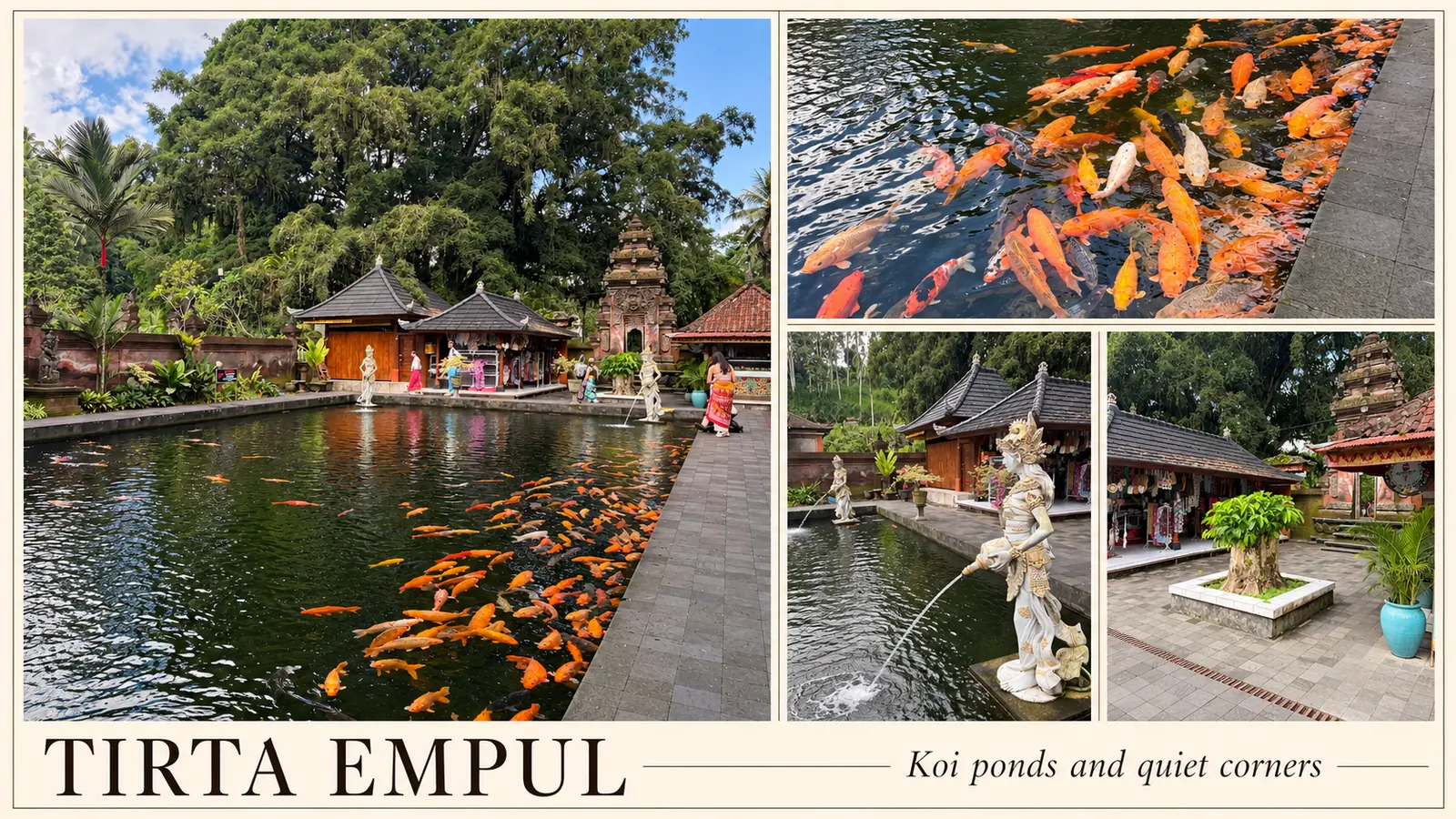
The koi pond provides another visual chapter of the visit. My photographs show orange fish gathering near the edge, fountain sculptures and reflections of the buildings around the water.
Other images focus on pavilion roofs, carved stonework and the shaded paths between areas. These details give the visit a sense of place beyond the purification pools.
When taking photographs, avoid blocking circulation or worship, and ask permission before making someone else the subject of a close portrait. Personal memories matter, but so does leaving other visitors room for theirs.
A Respectful Way to Include Tirta Empul in Your Trip
Leave enough room in your itinerary to walk, observe and ask questions. Do not assume that a short stop will be enough to join the ritual, change clothes and photograph every part of the grounds.
Confirm current opening hours, admission and rental charges before travelling. None of the photographs or draft prices should be treated as a current fee schedule.
My suggestion is to visit with curiosity rather than a checklist of spiritual results. Whether you participate or simply explore the permitted areas, take time to notice the water, architecture and activity around you.