Chasing Lights in Old Shanghai: A Magical Night at the 2026 Yuyuan Lantern Festival
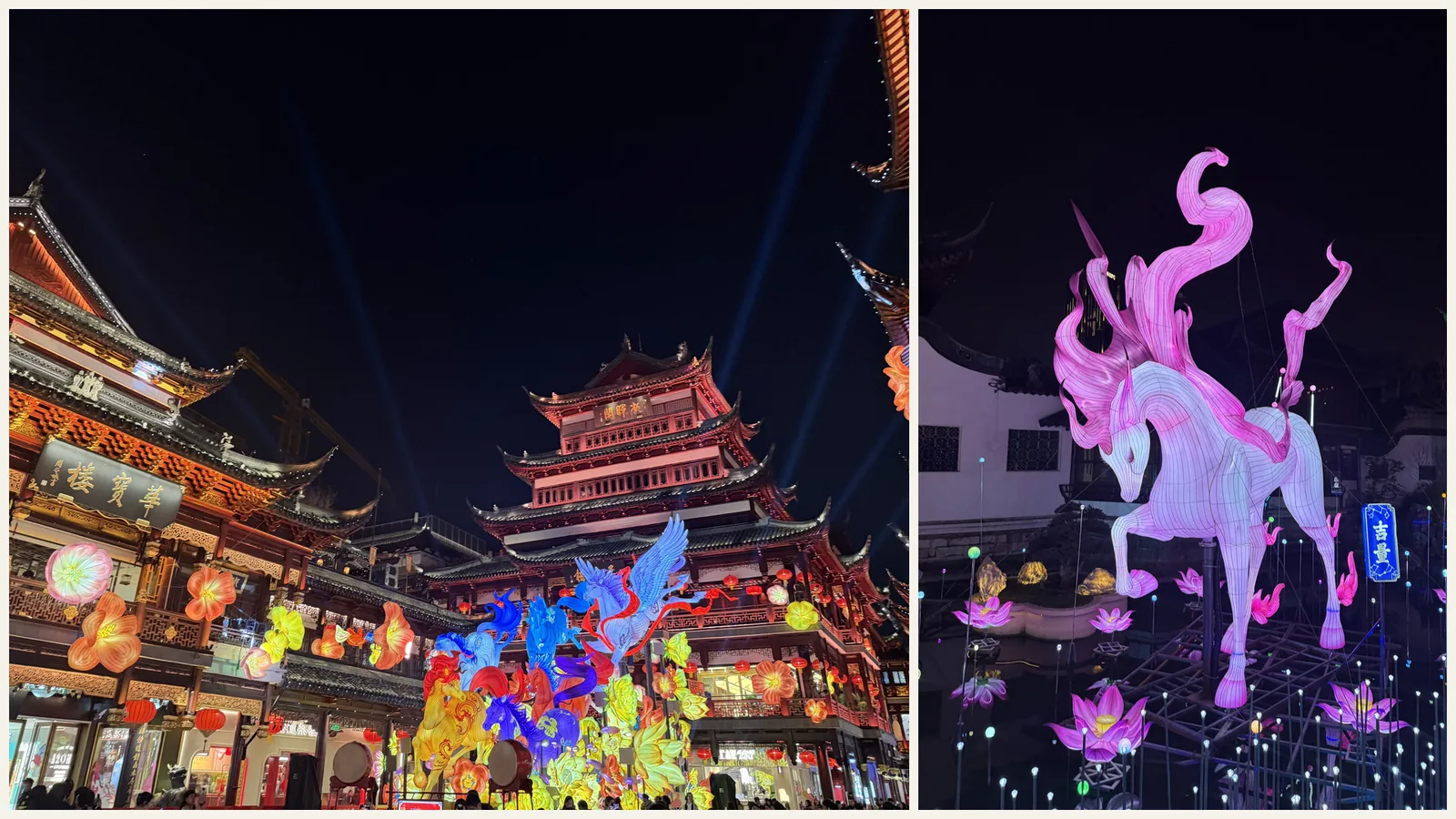
There are evenings when Shanghai feels like a city made of light. On 21 February 2026, I found one of them in Yuyuan Garden Malls (豫园商城): flowers glowing between dark timber balconies, a pink mythical horse above the water, and red lanterns drawing me from one courtyard to the next.
The pleasure was in looking up. A familiar roofline became the edge of a luminous garden; a narrow shopping lane opened into a sky full of ribbons and fantastical creatures. It felt wonderfully theatrical, with everyday shopfronts and passing visitors keeping the scene rooted in the city around it.
This is a photo-led account of the 2026 festival, which has ended. The walk explores Yuyuan’s shopping district and surrounding streets, rather than a night visit inside the separately managed classical Yu Garden. For a future trip, check the next edition’s announcements.
Before Nightfall: The Shape of the Old Town
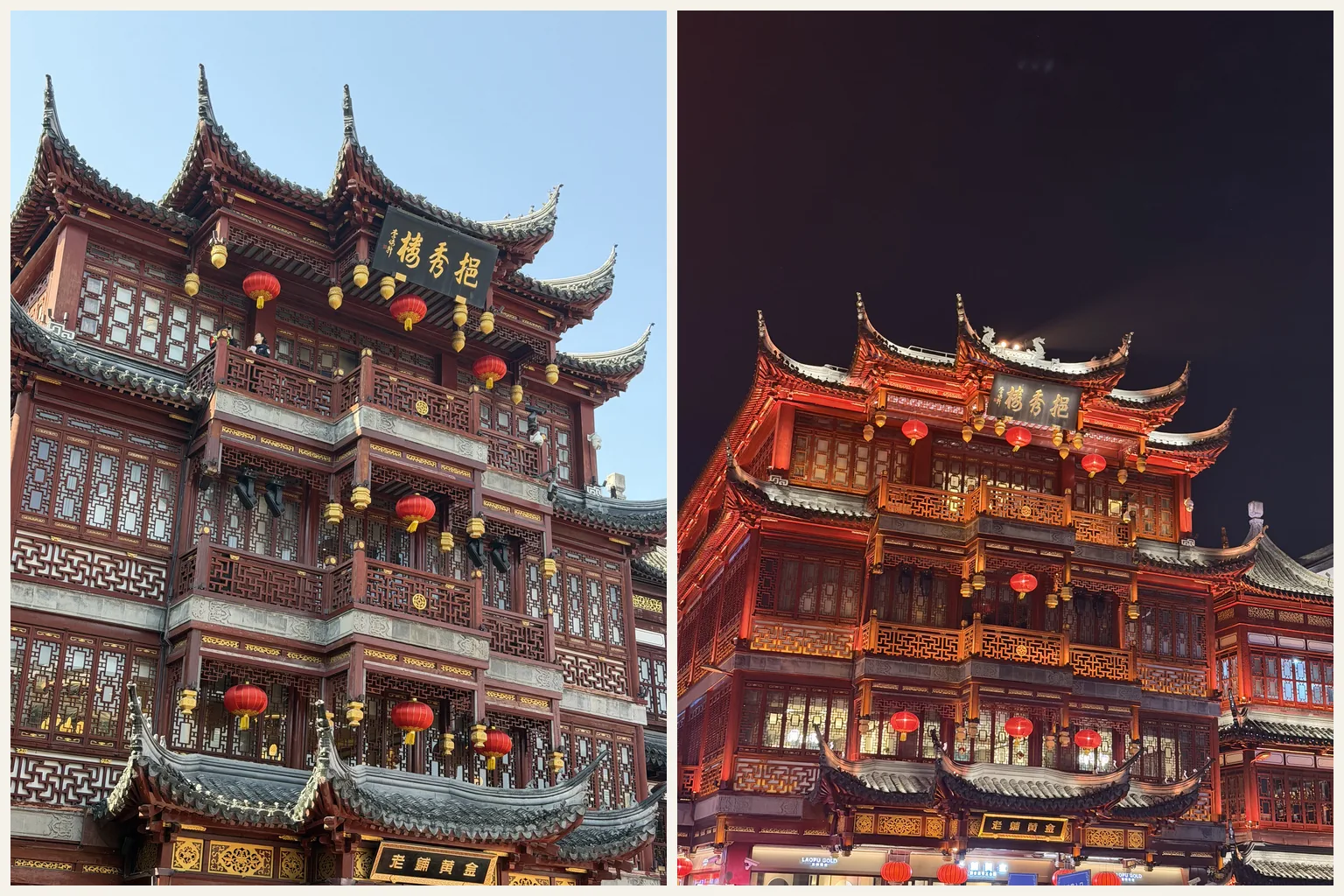
Daylight and darkness reveal different sides of the same buildings. In the daytime photographs, the upturned eaves stand clearly against the blue sky. After dark, warm lighting picks out the roof edges and timber balconies, while lanterns add another layer in front of them.
The district’s Ming–Qing-style architecture provides the setting, without every facade needing to be an untouched building from those dynasties. Look for the carved panels, latticework and overlapping roofs. They are worth noticing before the brighter installations take over your attention.
For a winter outing, I would leave time for both views: the architecture in the afternoon, then the changing colors as evening arrives.
Under the Flower Canopies
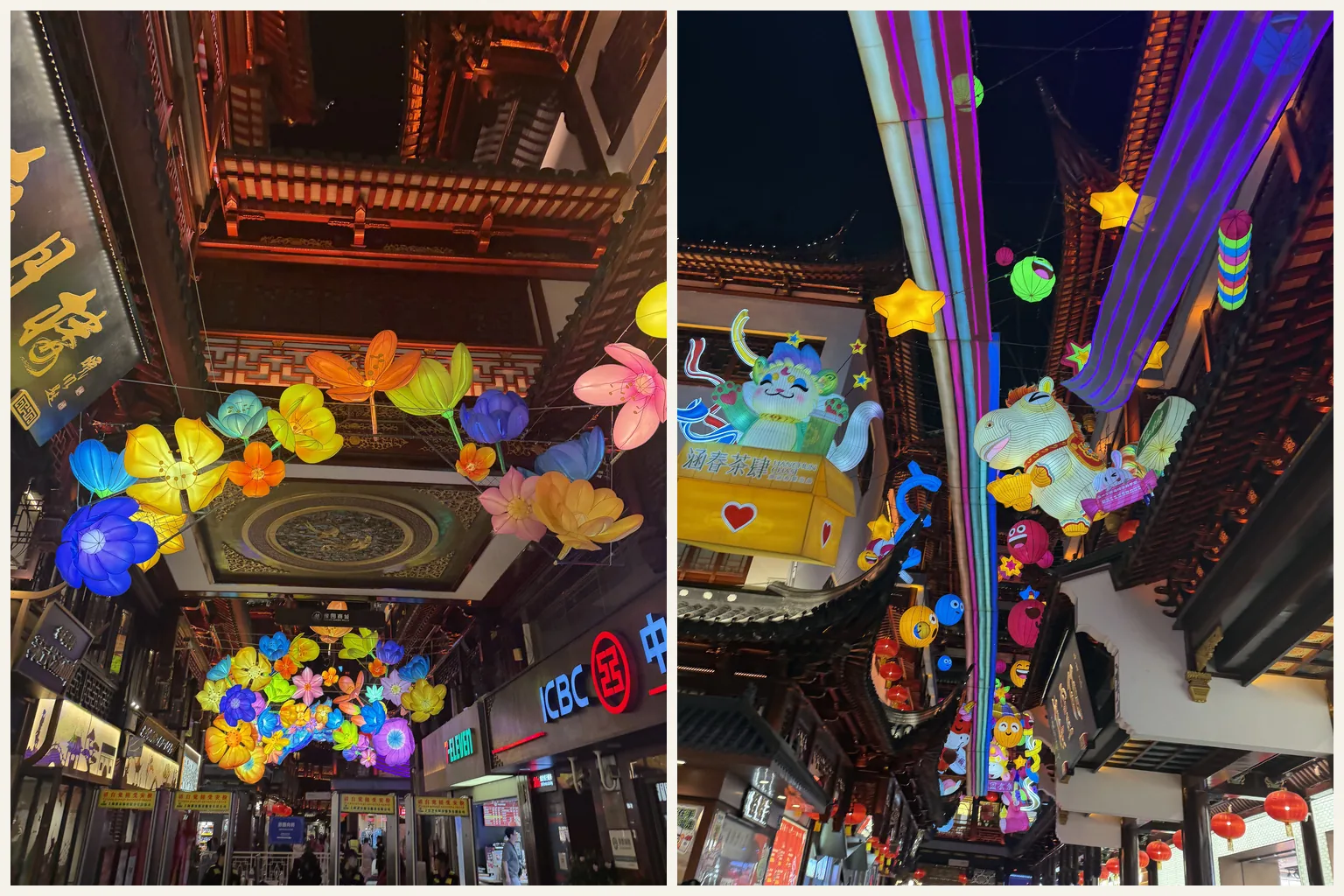
Some of my favorite views were overhead. Glowing petals and butterfly shapes stretched across the lanes, their blue, yellow, orange and pink surfaces set against dark beams and tiled eaves. Farther along, another cluster of flowers seemed to float beneath a decorated ceiling.
These were spaces to walk through, with the display changing as people moved below it. A wider photograph catches the depth of the passage; a closer one reveals the fine framework visible through a luminous petal.
There was something especially lovely about this meeting of scales: the weight of the timber architecture and the apparent lightness of the flowers suspended between it.
Following the Ribbon of Light
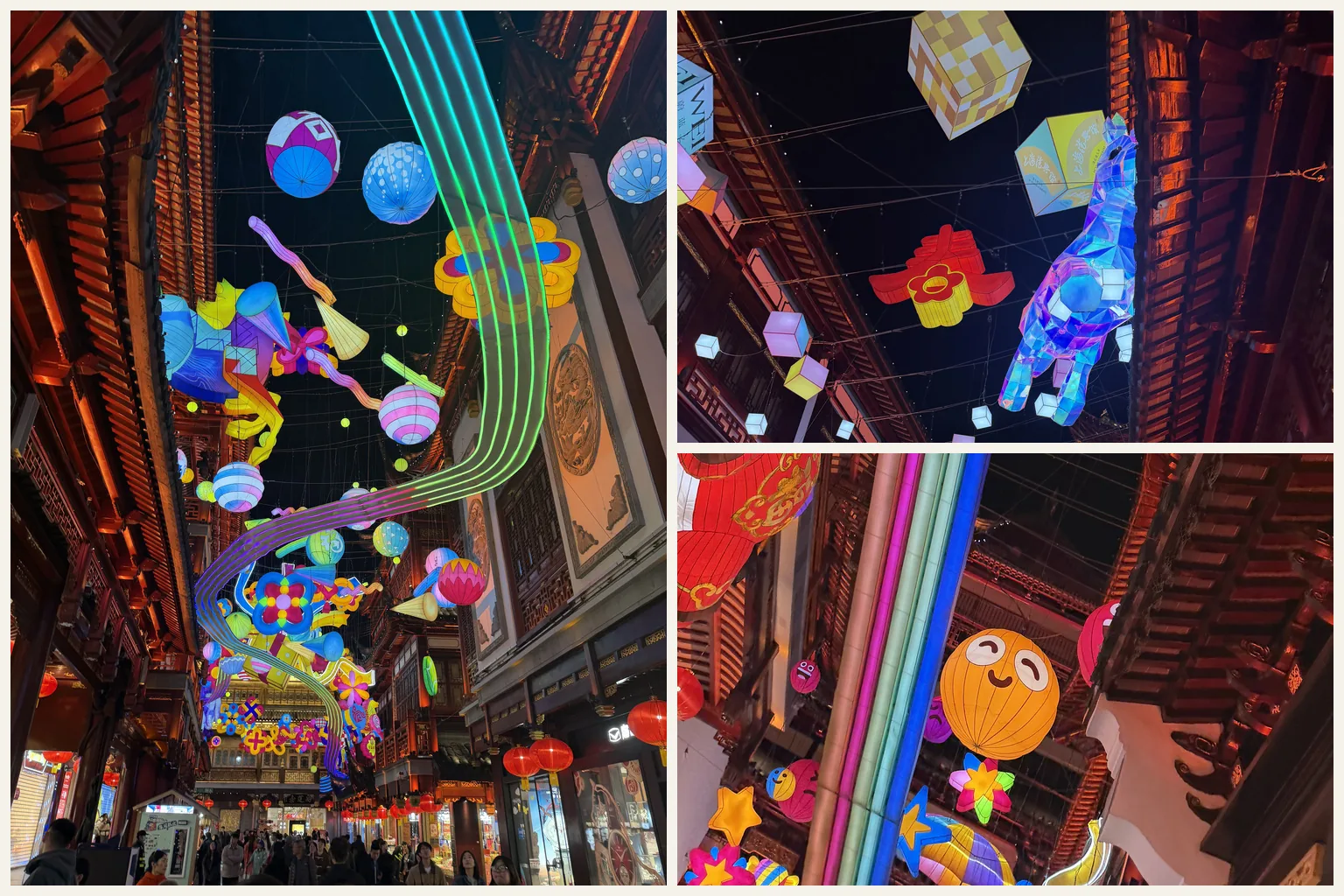
Elsewhere, long bands of green, blue and purple light curved above the street. Round lanterns, stars and playful characters hung among them, drawing the eye down the lane and then back up toward the roofs.
The festival’s published guide highlighted dancing horses on Ninghui Road (凝晖路). A geometric blue horse and an orange lantern with a smiling face captured that playful side of the celebration. The official 2026 overview explains the different display areas.
For photographs here, pause where there is space at the side of the lane. Looking upward can simplify a busy composition, but leave enough room around a creature’s head and feet to show its shape.
Meeting the Creatures of Shan Hai Jing
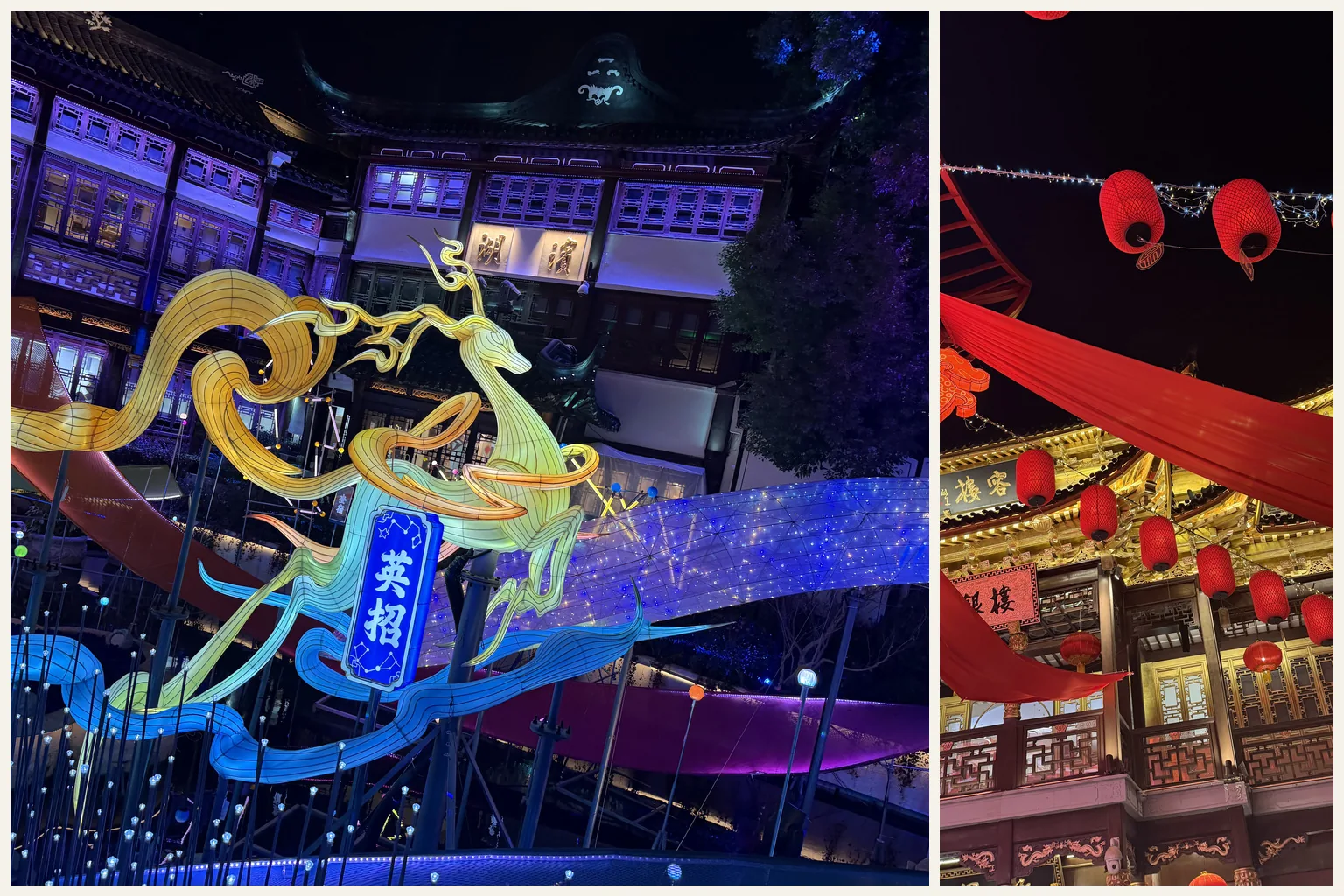
The larger lantern creatures gave the evening its fairy-tale quality. A pink horse rose above a field of tiny lights, while the golden-green installation labelled Yingzhao (英招) stood against blue and purple illumination. Flowing tails, curling forms and the visible ribs of the lanterns made them rewarding subjects from several angles.
The 2026 displays drew on Shan Hai Jing, usually translated as The Classic of Mountains and Seas. The organizer’s account identifies the pink Jiliang (吉量) among the mythical creatures around the lake. These names offer a way into the imagery, while the sculptures remain easy to enjoy simply as shapes and light. Fosun’s festival account gives more background on the installations.
I liked the contrast between these extravagant figures and the more restrained buildings behind them. A whole creature makes a striking image; a small detail of its lit framework tells another part of the story.
Red Lanterns and Wishing Trees
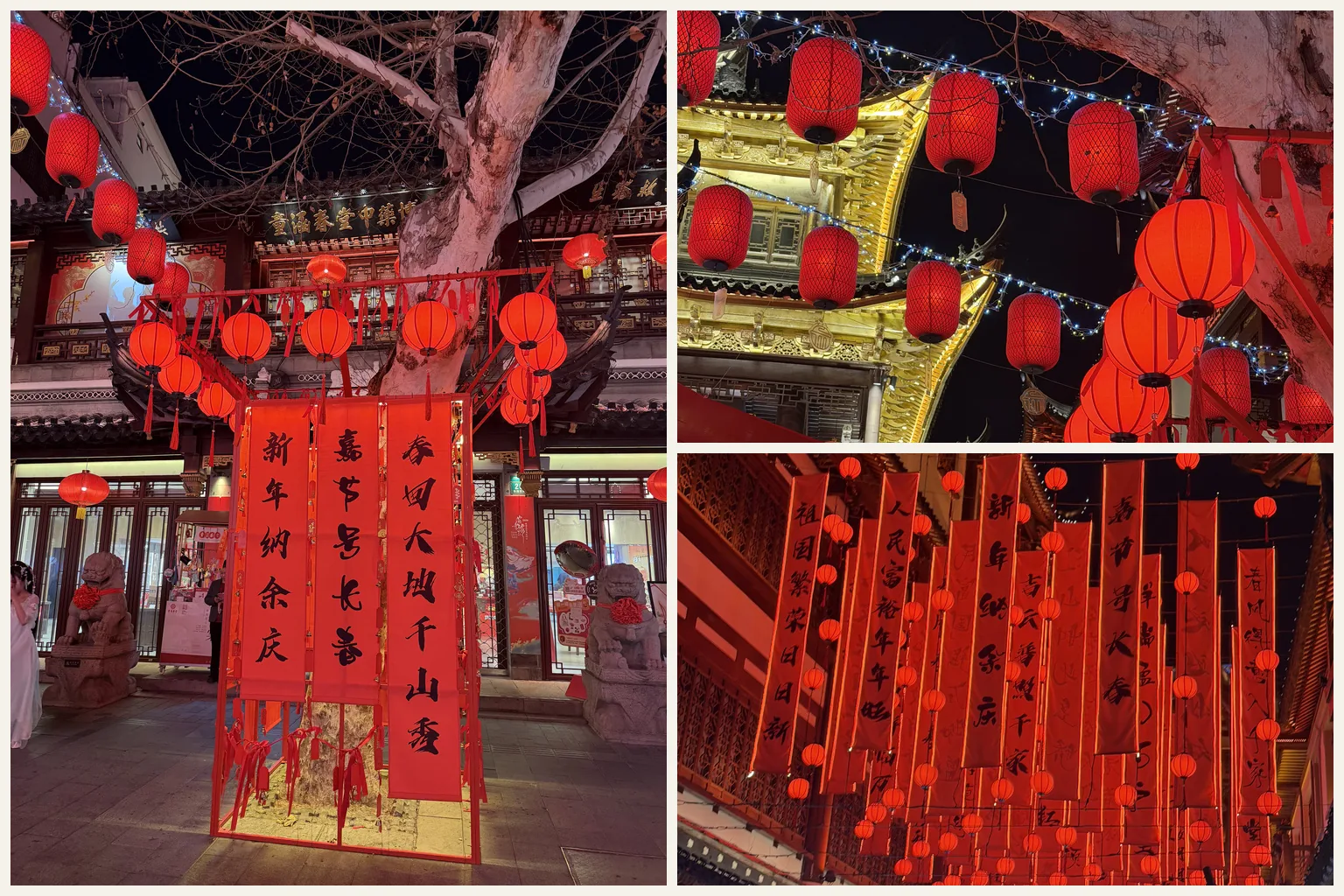
After the cooler colors around the lantern creatures, the red courtyards felt particularly warm. Lanterns hung in rows beneath bare branches, while crimson ribbons and calligraphy banners gathered around a large tree.
There was plenty to notice at ground level too: stone guardian lions, timber doors and the shopfronts behind the decorations. The most satisfying view brought those everyday architectural details together with the festival display.
This was the part of the evening that felt most closely tied to the season. The red cloth, written wishes and lantern light made an ordinary pause in a courtyard feel celebratory.
Practical Notes for a Future Winter Visit
Keep the edition and ticket zone clear
The dates and prices below describe the completed 2026 edition. They are useful context for this visit, and should not be used as a booking calendar or price list for a later festival.
| 2026 arrangement | Published information |
|---|---|
| Festival dates | 26 January–3 March 2026; no lighting or ticket sales on 16 February, Lunar New Year’s Eve. |
| Main folk-art lantern zone | Ticketed; published adult admission RMB 80 and child admission RMB 50. |
| Ticketed entry periods | 2–10 p.m. on peak days; 4–10 p.m. on regular days. Peak days included Fridays–Sundays, 17–23 February and 3 March. |
| Wider festival | The official announcement also listed five free lantern zones beyond the ticketed folk-art zone. |
Those entry periods were not a promise that every installation switched on at the same time. Before a future visit, check the organizer’s 豫园商城 WeChat service account for that edition’s tickets, entrance arrangements and lighting notices. A classical Yu Garden admission ticket should not be assumed to cover a lantern-festival zone. The historical details above come from Shanghai’s official 2026 ticket guide.
Arrive with time to see the change
Around 4:30 p.m. is a useful personal planning target for a winter visit if you want to see the buildings before dark. Check the sunset time and the event’s arrangements for your date, then allow room for a slow walk and a food stop.
If your dates are flexible, try a weekday outside the Lunar New Year holiday. My visit fell on a Saturday during the 2026 holiday period, so the photographs should not be read as evidence of a quiet weekday experience. Even on a weekday, popular lanes can fill quickly; follow the pedestrian flow and avoid stopping on narrow bridges or in gateways.
Getting there
Take Shanghai Metro Line 10 or Line 14 to Yuyuan Garden station (豫园站). The published 2026 transport guidance recommended Exit 1 or Exit 7 for Yuyuan Garden Malls. Follow current signs and any temporary crowd-control directions; the walking route and time depend on the entrance in use. The festival transport guidance provides the station and exit details.
Public transport is a sensible choice during the festival. The city’s traffic notice warned of temporary controls around busy streets, so leave flexibility in your route rather than relying on a taxi reaching a particular doorway. For a future edition, check the city’s current notices before you travel. Shanghai’s 2026 traffic notice describes the controls announced for that year.
Leave room for something warm
Nanxiang Steamed Bun Restaurant (南翔馒头店) is a nearby option for xiaolongbao, the soup-filled dumplings associated with Shanghai. Check its current service times and queue before making it your dinner plan; Shanghai’s visitor information introduces the restaurant and its steamed buns.
A warm pear drink is another appealing idea for a chilly walk if you find one on the day’s menu. Leave a little room in your plans for a warm drink or a meal between stretches of sightseeing.
A Last Look Up
What stayed with me was the way the lanterns changed the spaces between the buildings. Flowers made a ceiling, ribbons led the eye along a street, and mythical creatures turned a familiar courtyard into a scene from folklore.
If you enjoy photography, architecture or simply wandering after dark, a future Yuyuan lantern season is worth considering. Give yourself time to look beyond the biggest display: a lantern beneath an eave, a written wish or a small change in color can be just as memorable.
Sources and Photo Notes
Photographs are from my visit on 21 February 2026. The editorial collages combine separate viewpoints; they are not continuous panoramas or route maps.
Festival, transport and restaurant references were reviewed on 18 November 2026. The 2026 event information is retained as historical context. Future dates, prices, access arrangements and menus require a fresh check before travel.