From Street Level to the Clouds: A Shanghai Skyline & Heritage Itinerary
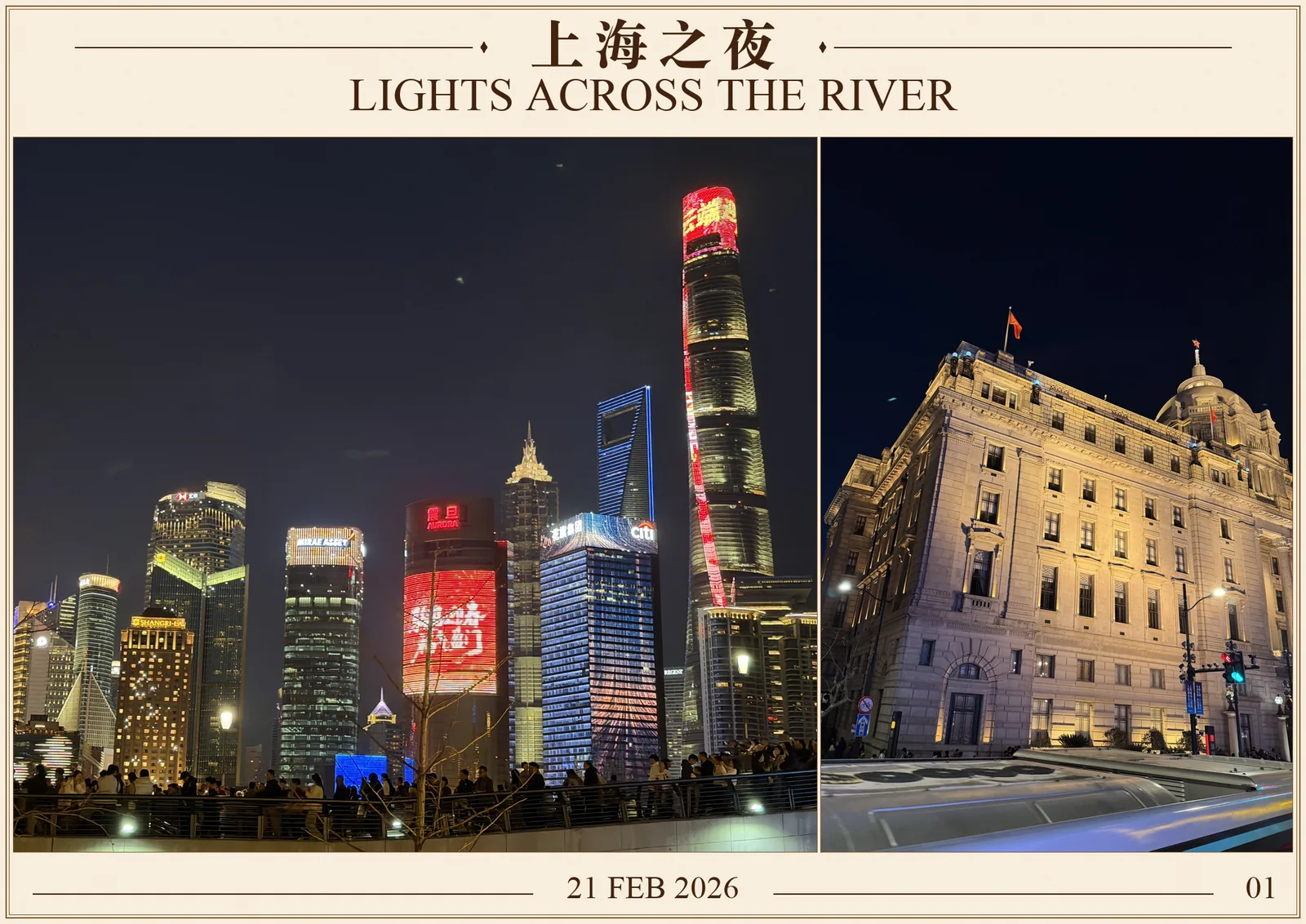
Shanghai makes more sense when you give it two viewpoints. At street level, the city is a succession of stone facades, traffic, shop windows and people. From high above the Huangpu River, those separate scenes become a map: a bend of water, a bright waterfront and towers clustered on the opposite bank.
On 21 February 2026, I combined an afternoon sightseeing bus ride and evening city views with a visit to Top of Shanghai, the observatory inside Shanghai Tower. These nine photo collages follow that change in perspective, from a bus brochure in my hand to my reflection in a window above the river.
This is an afternoon-to-night Shanghai itinerary based on that visit, rather than a minute-by-minute account of every transfer. The collages pair different moments from the same day. The planning notes below are suggestions for a future visit; check current transport, admission and visibility before setting out.
An Afternoon on the Sightseeing Bus
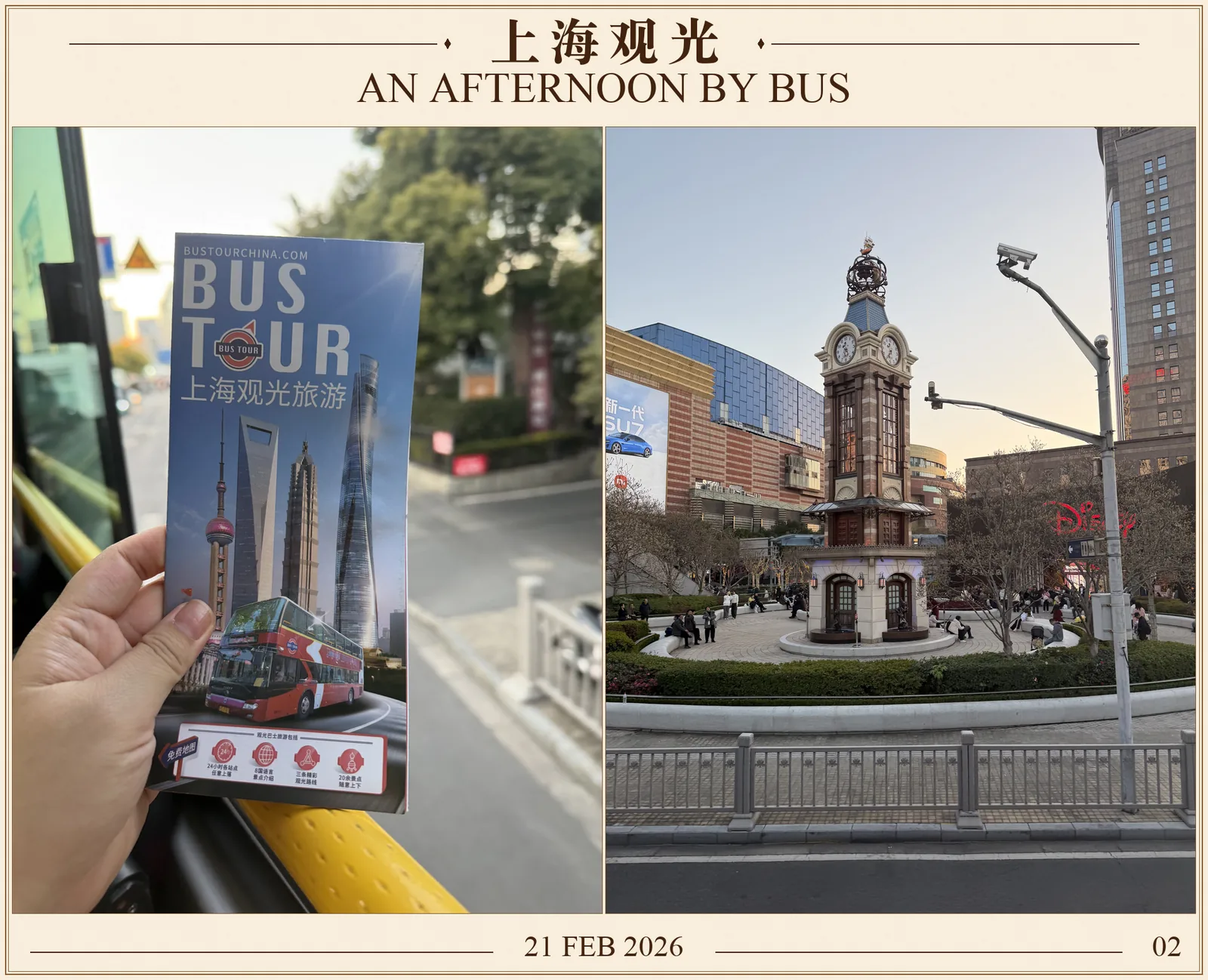
The bus gave the afternoon a useful rhythm: watch the city move past, then look more closely at a building or a street corner. The brochure in my photograph became a small souvenir of that part of the day, with a red double-decker bus and Shanghai landmarks printed on its cover.
A sightseeing bus can help you get your bearings, but choose the route for the places you want to see. Puxi, on the western side of the Huangpu, and Lujiazui in Pudong offer different views, and a ticket should not be assumed to include every loop or an evening bridge crossing. Shanghai’s visitor portal describes different city-tour routes and directs travelers to Bus Tour for operator information. Check the current stop list and last departures with the operator. Shanghai’s city-tour overview is a useful starting point.
The clock tower beside the brochure in my collage is a separate street-level scene from the Shanghai Disney Store plaza in Lujiazui. Its Mickey Mouse clock faces, little ship above the mechanism and decorative details make it easy to recognize. Disney identifies this as an Imagineering-designed clock tower in the store’s entry plaza. Disney’s account of the clock tower gives the background to this playful landmark among the skyscrapers.
Nanpu Bridge as the City Lights Come On
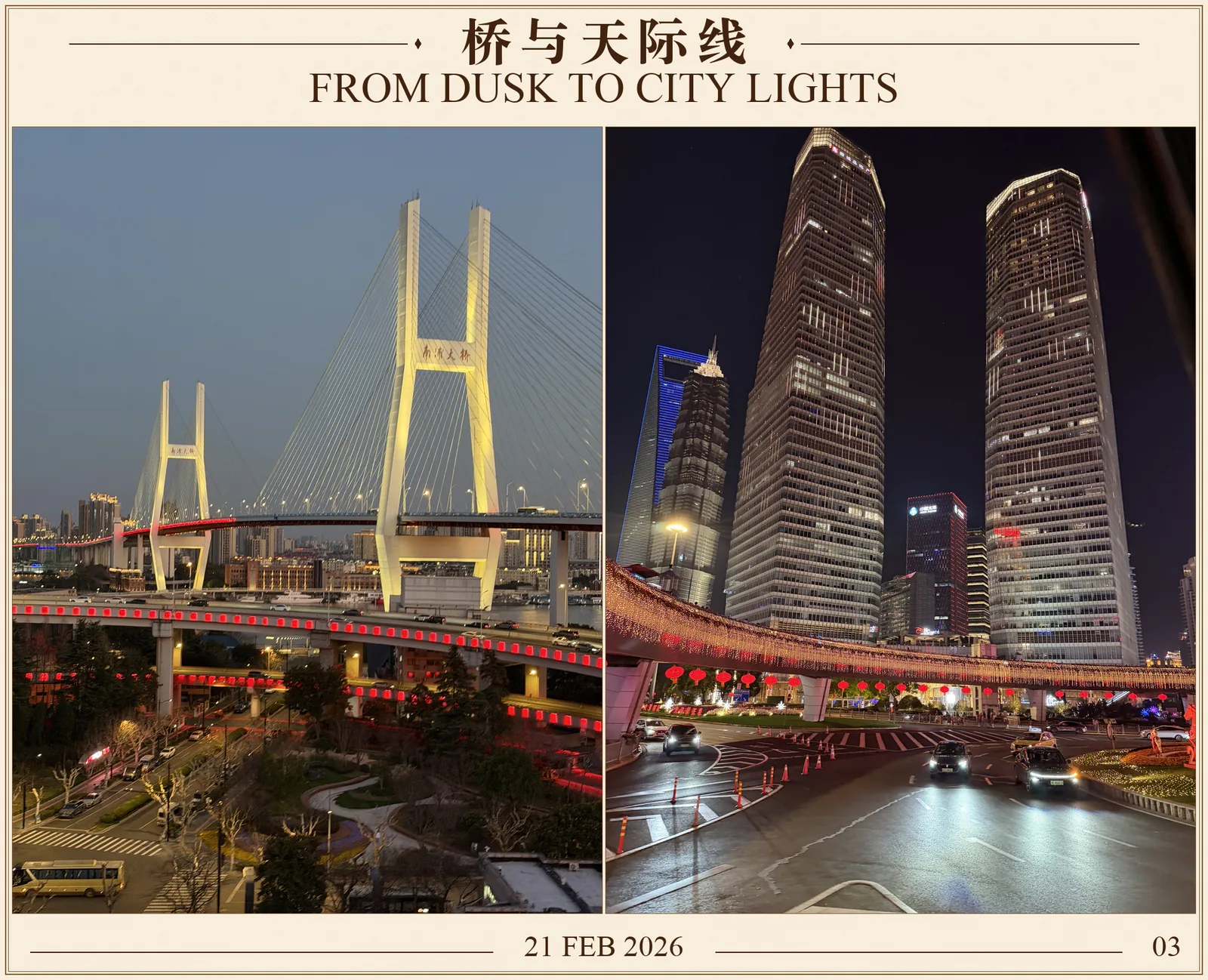
The Nanpu Bridge photographs bring a different geometry into the day: tall H-shaped pylons, radiating cables and roads curling beneath them. In the photograph, the pylons glow a warm yellow while red lighting traces sections of the approach roads. Cars and streetlights give the scene its sense of movement.
This was one of the most striking changes of scale before the observatory. A bridge is something you normally travel across; seen from an elevated viewpoint, its ramps become part of the city’s pattern. Nanpu is especially recognizable for its spiral approach, documented by Guinness World Records.
The collage pairs that bridge scene with a later view of Lujiazui’s towers and a lantern-decorated pedestrian bridge. They are separate viewpoints, brought together to show the transition from dusk to night. If Nanpu Bridge is important to your own route, confirm that the particular bus service you book includes it.
Golden Facades Along the Bund
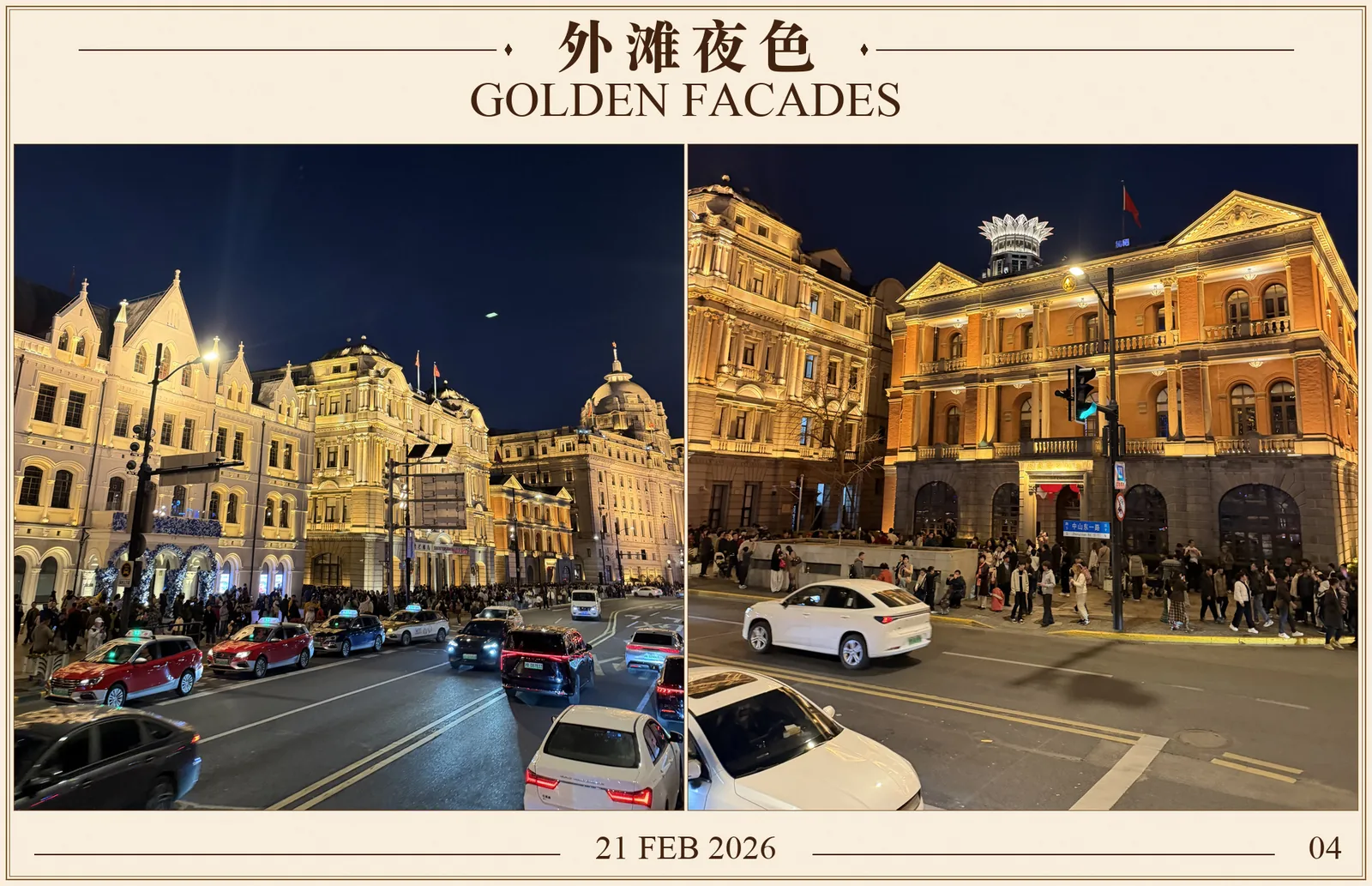
The Bund brought the evening back to human scale. Warm light picked out columns, window surrounds and rooflines, while taxis and pedestrians filled the street below. Looking up at those facades felt very different from seeing them later as a golden strip beside the river.
This is the historic waterfront along Zhongshan East 1st Road, facing Lujiazui across the Huangpu. For an architectural stop, the former Jardine Matheson Building is at No. 27 The Bund, now associated with the House of Roosevelt. Shanghai’s visitor portal identifies the building and its address in its Bund architecture walk.
You do not need to identify every building to enjoy this stretch. Give yourself time for both directions of view: the illuminated stone buildings behind you and the modern skyline across the water. Leave room in the evening for the walk and the river crossing, rather than treating the Bund as a quick photograph before an observatory reservation.
Entering Top of Shanghai
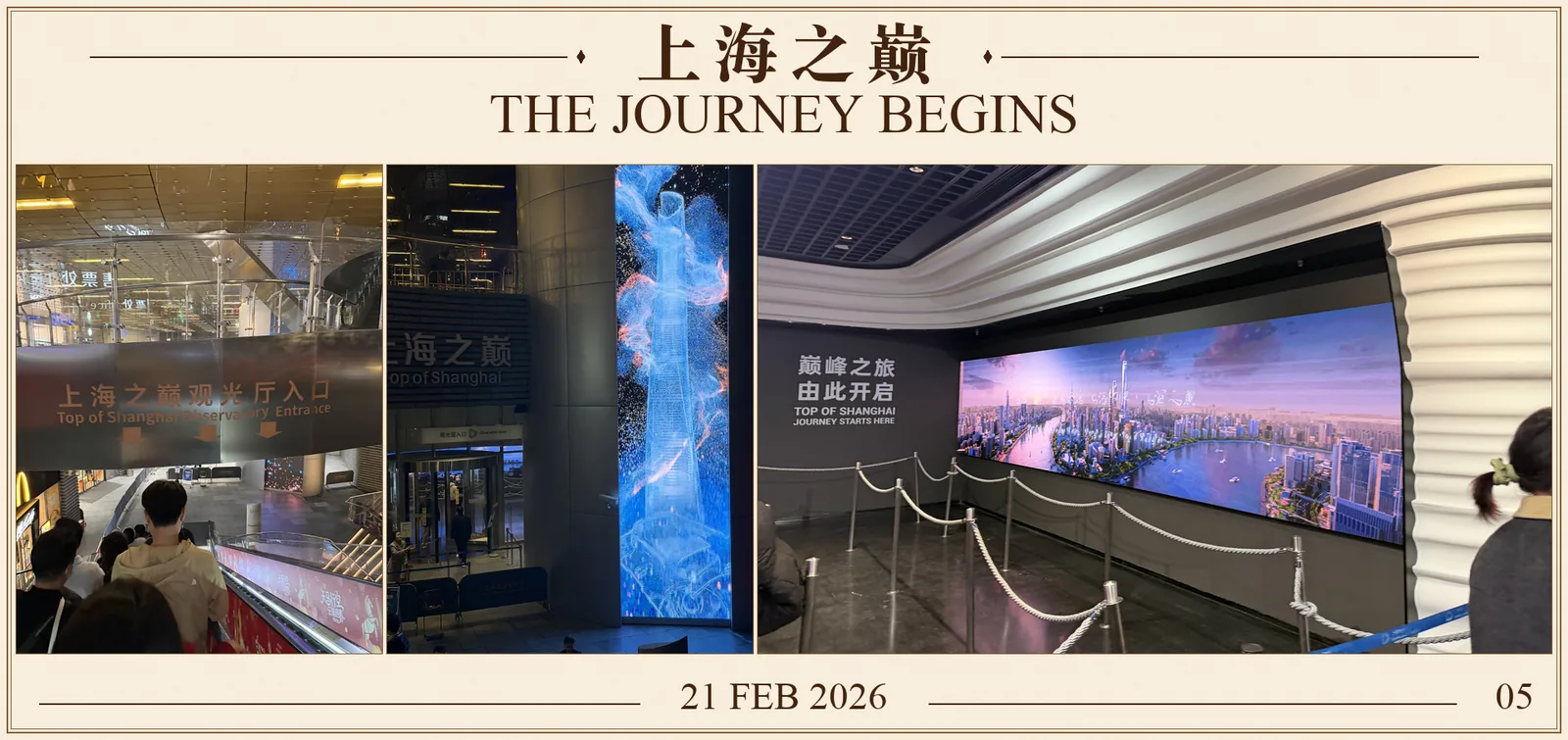
The next change in perspective began inside Shanghai Tower (上海中心大厦). My entrance photographs show the Top of Shanghai signs, a blue digital image of the tower and the exhibition area where the upward journey begins.
The operator places the Top of Shanghai Exhibition Hall on B1 and the main observatory on the 118th floor, 546 meters above ground. Its exhibition introduces the tower and the development of Shanghai’s skyline before the ascent. Higher art-space experiences are listed separately, so check the inclusions of the ticket you choose. The official Top of Shanghai page explains the spaces and admission information.
For me, the entrance sequence made the visit feel like a continuation of the afternoon. I had spent hours looking up at buildings; now I was about to see how those buildings fitted together.
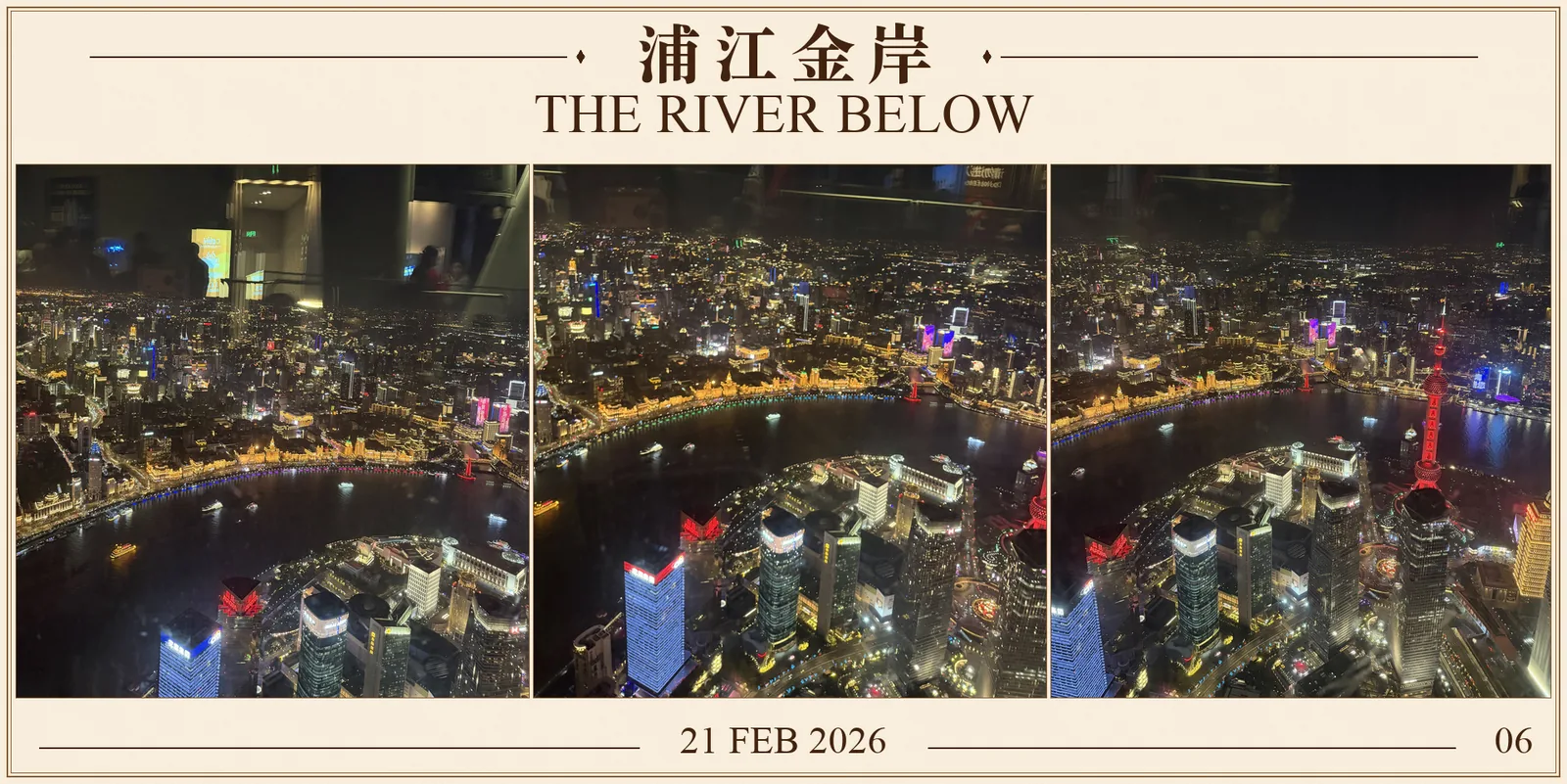
The Huangpu River from the 118th Floor
From the observatory, the river became the organizing feature of the view. Its dark surface gave the city lights room to stand out: warm lines along the Bund, brighter clusters of towers in Pudong and small illuminated boats on the water.
At street level, the two sides can feel like separate destinations. From above, you can follow their relationship along the river bends. The historic waterfront is still recognizable, but the individual facades become a continuous edge of gold.
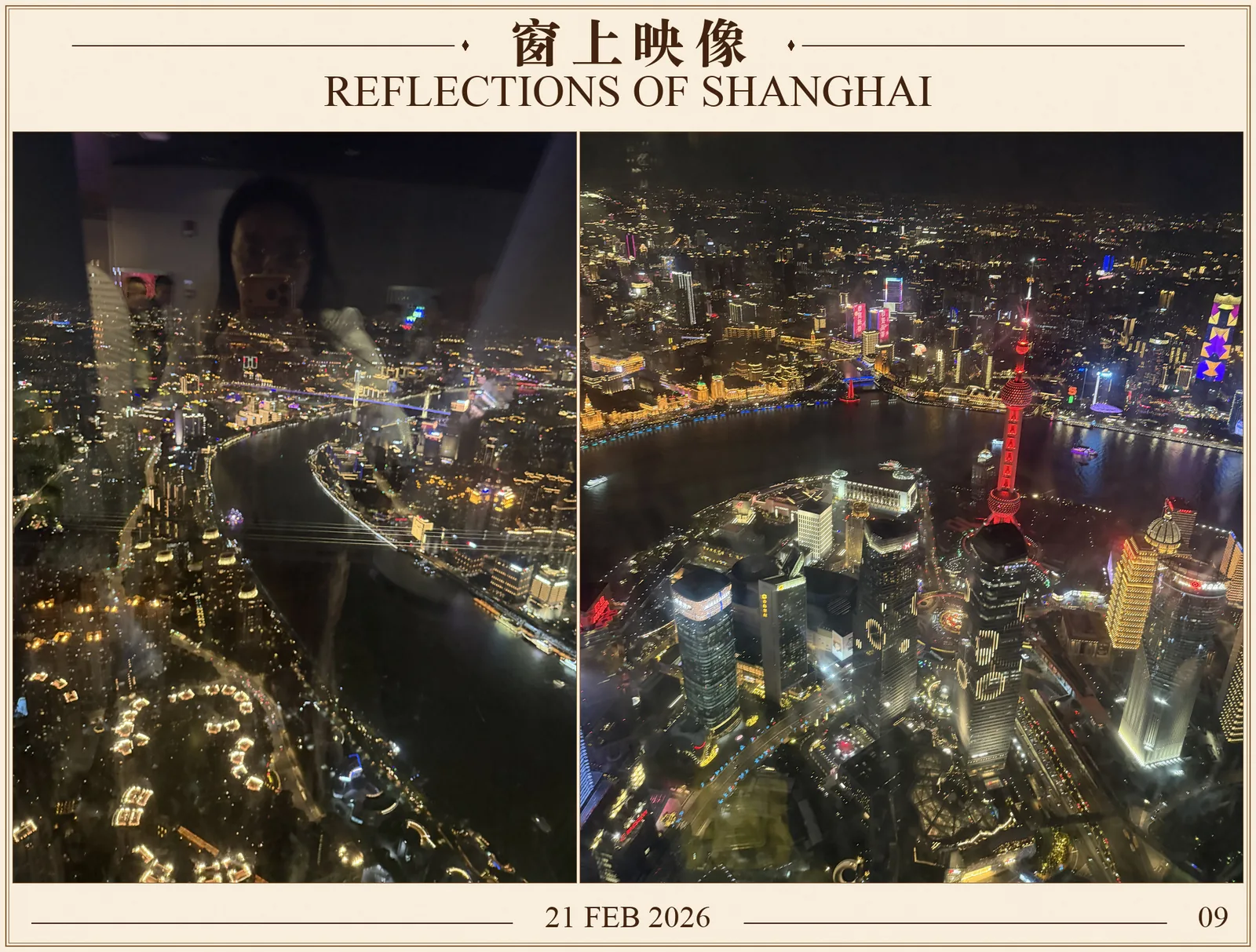
The windows also made themselves visible. Interior lights and other visitors appeared in the glass, especially across darker parts of the scene. Those reflections are present in my photographs; the pictures record the experience of looking through an observatory window, with its limitations as well as its views.
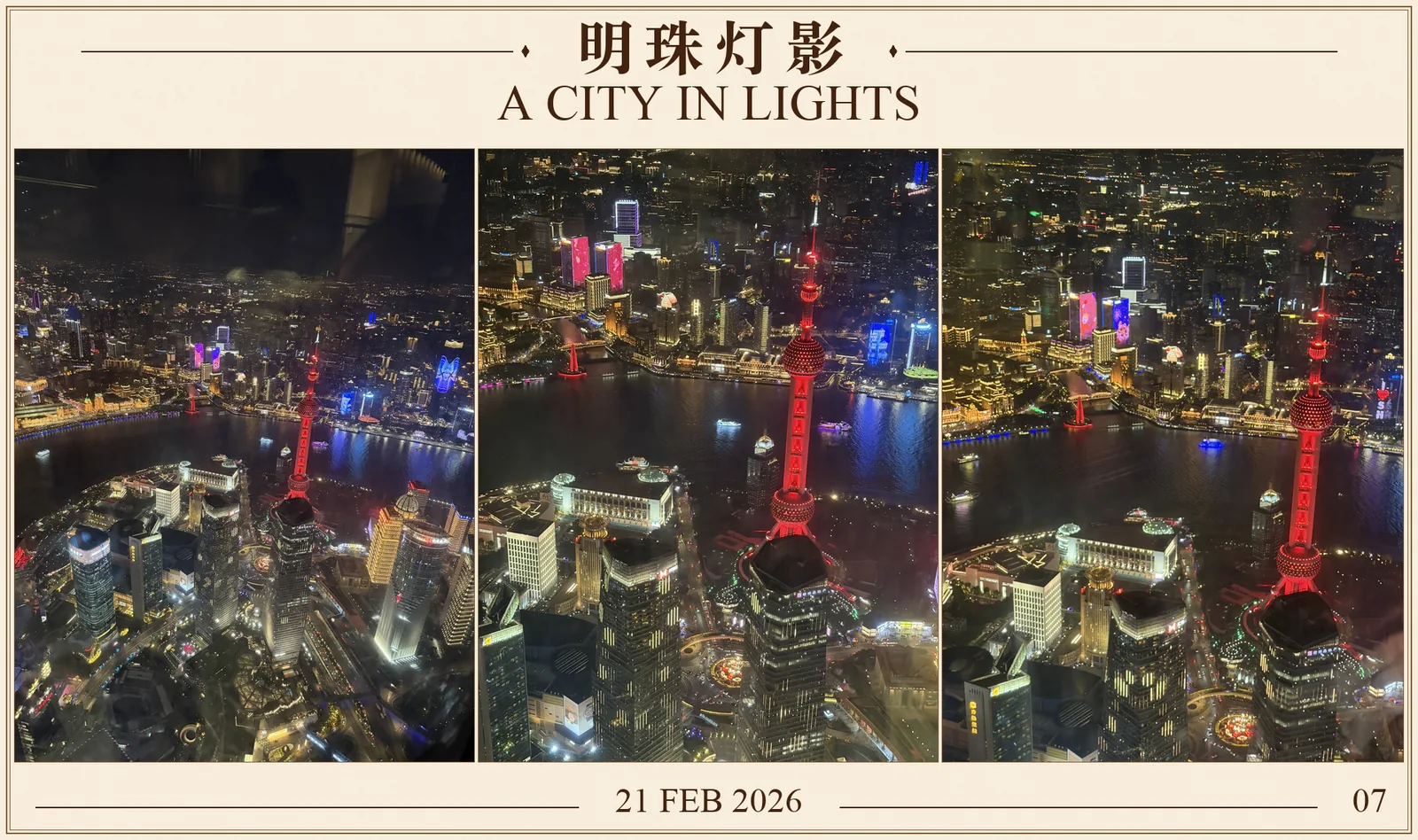
Looking Down at the Oriental Pearl Tower
The red-lit Oriental Pearl TV Tower was a clear reference point. From below, it dominates a view of Lujiazui. From the 118th floor, its spheres and spire sit within a much larger arrangement of buildings, roads and water.
The three photographs in this collage move between a wider view and closer framing. The tower stays recognizable while the buildings around it change in prominence. It is a useful way to orient yourself before searching for smaller details across the river.
Night photography here rewards patience more than constant shooting. Move between windows, pause to let your eyes adjust, and compare a broad view with a tighter composition. The photograph you like best may be the one with a simpler arrangement of lights.
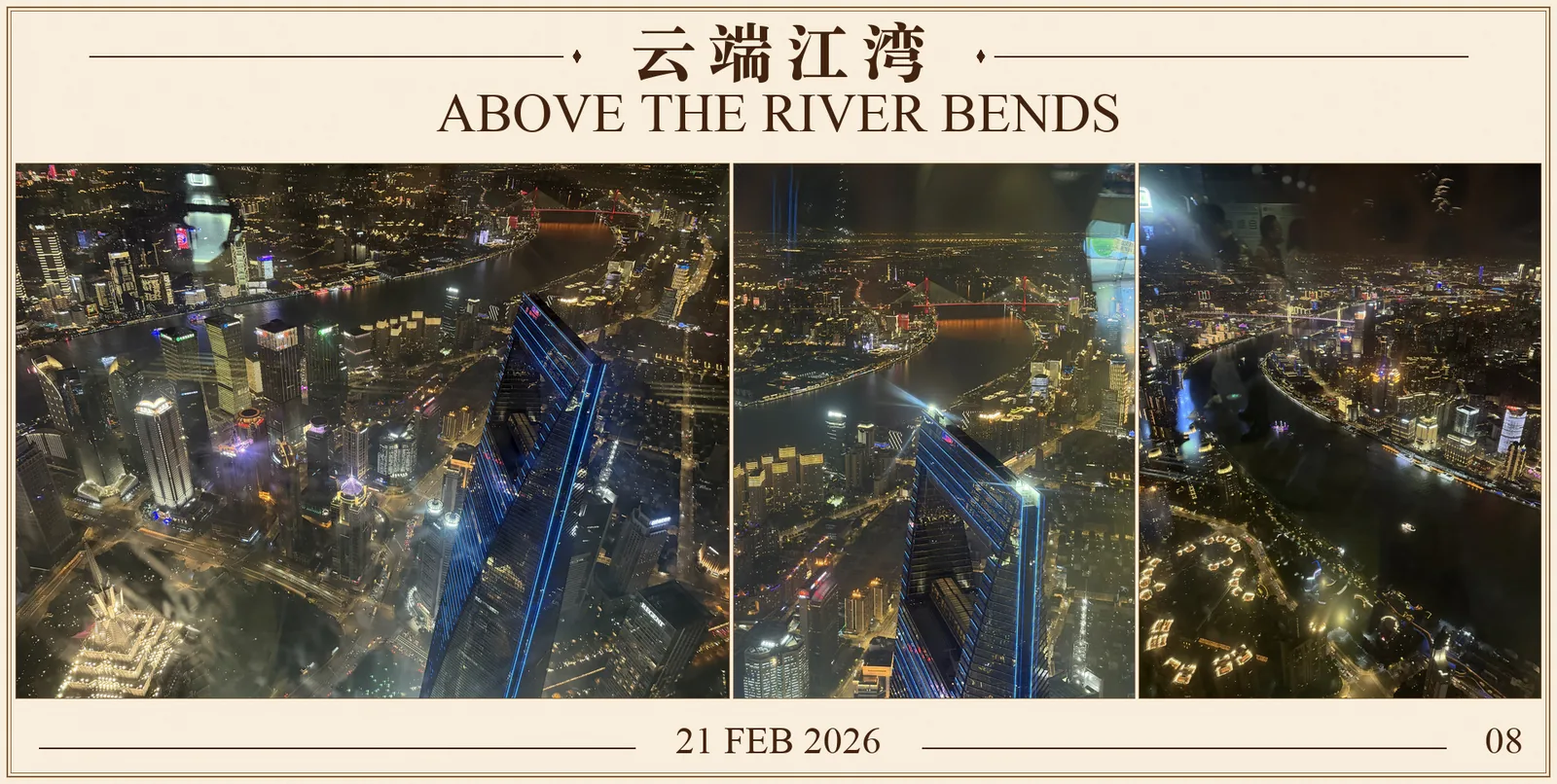
Following the River Bends and Blue-Lit Towers
Another set of windows brought the blue-edged Shanghai World Financial Center into the foreground. Its strong outline contrasted with the finer patterns of streets and windows below. The stepped form of Jin Mao Tower and the river beyond added another sense of depth to the cityscape.
The wider photograph and the two vertical views in this collage show why it is worth walking around the viewing floor. A small change of position can shift the emphasis from a nearby tower to a bridge farther along the river, or to the curve of the illuminated banks.
I would leave time to look away from the camera too. A night view this dense is difficult to take in at once. Following one river bend or one line of lights gives your eyes somewhere to begin.
A Reflection to End the Evening
My final collage includes my own reflection holding a phone against the city lights. It is a less clean image than a reflection-free skyline photograph, but it is the one that most clearly places me in the visit.
That overlapping view brought the day together: a person at a window, the river below and the buildings I had been looking at from the ground. The ascent had changed the scale of Shanghai without making the street-level scenes feel any less important.
For a first visit, that is the appeal of combining the Bund and Shanghai Tower. One gives you the texture of the city; the other helps you understand its shape.
Planning Your Own Afternoon-to-Night Route
Use this as a flexible sequence, rather than a fixed timetable. My photographs cover afternoon sightseeing, early-evening street scenes and later observatory views. They do not establish a universal lighting schedule or a crowd-free admission time.
| Stage | What to allow for | Planning note |
|---|---|---|
| Afternoon sightseeing bus | A loop that suits your interests, plus any stops | Confirm the operator, route, boarding point and last departure. |
| Bund walk | Time for the buildings and the view across the river | Lighting and access can vary; keep your observatory booking in mind. |
| Crossing to Pudong | The walk to the station, the train and the onward walk | East Nanjing Road to Lujiazui is one stop on Metro Line 2. |
| Shanghai Tower | Admission procedures, the exhibition and viewing time | Check the selected ticket, entry window, final admission and visibility. |
From East Nanjing Road station (南京东路), take Metro Line 2 eastbound for Lujiazui (陆家嘴). The stations are adjacent on the Line 2 station guide. East Nanjing Road also serves Line 10, but Line 10 does not provide this direct journey. The short train ride is only part of the transfer: allow for walking at both ends and follow current station signs.
For Shanghai Tower, use the operator’s current admission channels and bring the identity document required for your booking. This February travel log does not quote a current ticket price or promise a particular closing time. A later evening slot can suit a night-view itinerary, but it does not guarantee shorter queues.
Photographing the View Through Glass
- Reduce bright reflections. Dark clothing can help. Bring the lens close to the window without pressing equipment against the glass, and change position if an interior light remains visible.
- Keep flash off. It is unlikely to help a distant skyline through glass. Steady the phone and use its night setting when appropriate.
- Try several compositions. Take a wide river view, a recognizable landmark and a smaller detail instead of repeating the same frame.
- Keep one personal photograph. A silhouette or reflection can make a useful companion to the cleaner city views.
Visibility matters as much as height. Check conditions before committing to the visit, and judge the view from the windows on arrival. My photographs retain the original reflections and dark areas rather than suggesting an unobstructed view in every direction.
Questions About This Shanghai Itinerary
Can I combine the Bund and Shanghai Tower in one day?
Yes. They work well as a street-level waterfront walk followed by a high-level city view. Build the day around your chosen bus service and observatory entry window, with enough time for the river crossing.
Which floor is Top of Shanghai on?
The main observatory is on floor 118, at 546 meters, according to Shanghai Tower’s official visitor information linked above. Check separately whether your booking includes any higher-floor experience.
Is an evening visit better than sunset?
They offer different photographs. This visit emphasizes illuminated buildings and the river after dark. Choose the light you want and a practical admission time; sunset visibility and crowd levels are not guaranteed.
What else can I read before visiting Shanghai?
For another side of the city, see my February evening at the Yuyuan Lantern Festival. You can also browse more places and travel stories to continue planning.