
The EW3 visa, also known as EB-3 Other Workers, offers a path to permanent residency for individuals performing unskilled labor that requires less than two years of training or experience. Understanding the EW3 Visa Timeline—from employer sponsorship through final green card approval—helps applicants set realistic expectations and reduce anxiety during what can be a multi-year journey. This guide breaks down each phase, typical wait times, and critical compliance considerations.
What Is EW3 / EB-3 Other Workers?
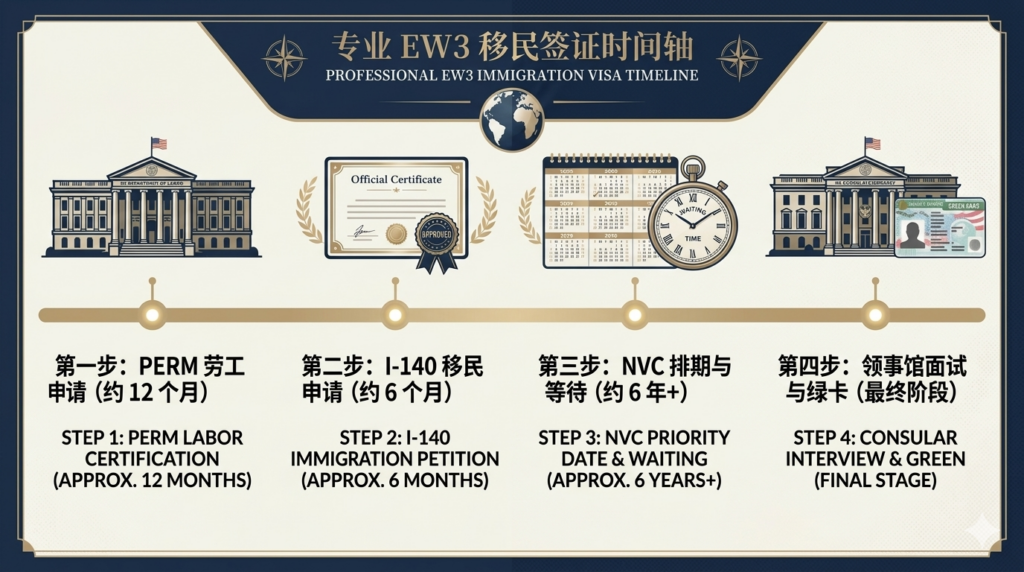
The EB-3 Other Workers category is a permanent employment-based visa for positions that do not require advanced education or specialized skills. To qualify, the job must be full-time, permanent, and the employer must demonstrate that no qualified U.S. workers are available. This category has historically faced significant backlogs due to high demand and annual numerical limits, making timeline awareness essential for anyone considering this path.
Step 1: Initiating the EW3 Visa Timeline with PERM
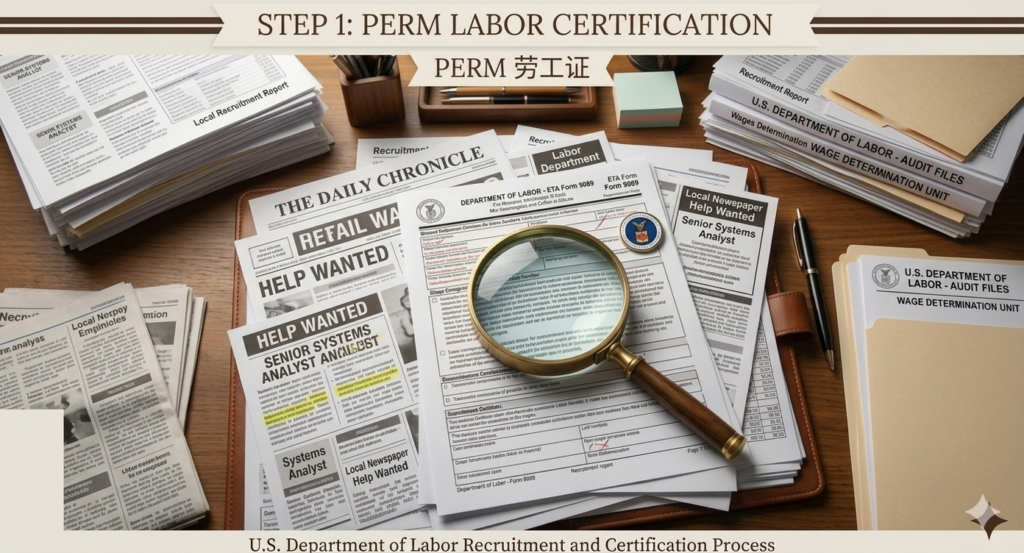
The PERM (Program Electronic Review Management) labor certification is the foundation of the EW3 process. Your U.S. employer must obtain this certification from the Department of Labor (DOL) to prove that hiring a foreign worker will not adversely affect U.S. workers.
During this phase, the employer conducts a supervised recruitment campaign, including newspaper advertisements and other required steps, to test the labor market. The DOL then reviews the application for compliance with recruitment and wage requirements.
Processing times for PERM labor certification have varied considerably. Historically, adjudication has ranged from several months to over a year, depending on DOL workload, whether the case is selected for audit, and the complexity of the employer’s recruitment efforts. Audit requests can add substantial delays. Employers should ensure strict adherence to all recruitment documentation requirements to minimize risk of denial or extended processing.
🔍 Real-Life Snapshot: Want to see how long the PERM stage actually takes right now? Check out my live data here: My Personal PERM Case Study.
Step 2: Filing the I-140 Petition
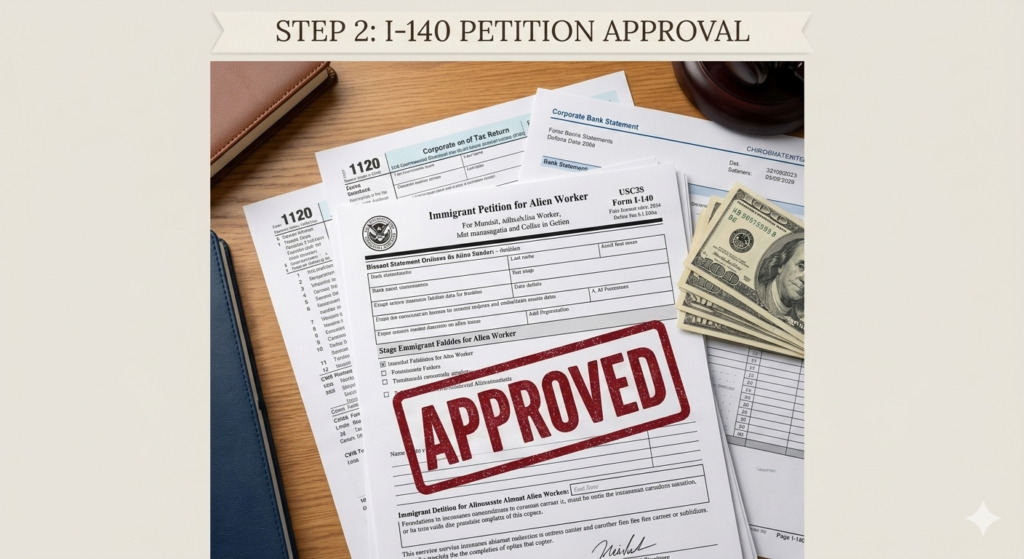
Once PERM certification is approved, the employer files Form I-140, Immigrant Petition for Alien Worker, with U.S. Citizenship and Immigration Services (USCIS). This petition establishes that the employer has the ability to pay the offered wage and that the beneficiary meets the job requirements.
USCIS offers optional Premium Processing for certain I-140 categories, though availability for EB-3 Other Workers has been limited or unavailable at various times. Standard processing times have fluctuated based on service center workload and policy changes. Applicants should verify current processing estimates through official USCIS resources, as these figures change periodically.
Step 3: Priority Dates and the Visa Bulletin
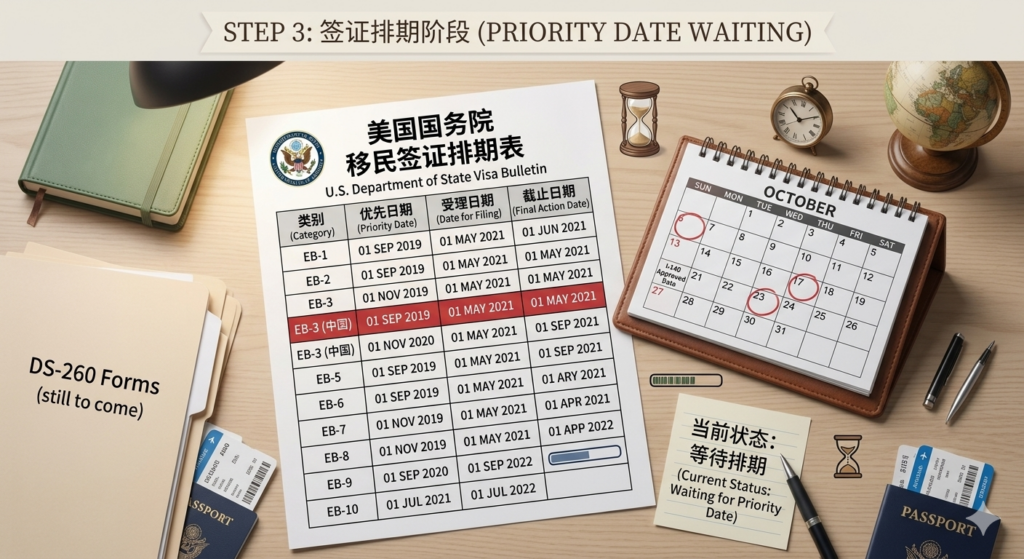
After I-140 approval, the critical factor becomes the priority date—the date when the PERM labor certification was filed. This date determines the applicant’s place in line for an immigrant visa number.
The Department of State publishes a monthly Visa Bulletin showing which priority dates are currently eligible for visa issuance. The EB-3 Other Workers category often experiences substantial retrogression and backlogs, particularly for applicants from countries with high demand such as Mexico, the Philippines, and others. Waiting periods in this step can extend from several years to well over a decade in some cases, depending on country of chargeability and overall visa availability.
Applicants must monitor the Visa Bulletin monthly, as dates can advance, stall, or even move backward (retrogress). The timeline for this stage is unpredictable and varies significantly by individual circumstances.
Tracking these monthly updates is vital to project your total EW3 Visa Timeline.
Step 4: Consular Processing or Adjustment of Status

When a priority date becomes current according to the Visa Bulletin, the applicant may proceed to final green card processing. Those outside the United States typically use consular processing at a U.S. embassy or consulate abroad, while those lawfully present in the U.S. may be eligible to file Form I-485 for adjustment of status.
Consular processing involves National Visa Center (NVC) document collection, fee payments, medical examination, and a visa interview. Adjustment of status processing includes biometrics, potential interview scheduling, and background checks. Processing times for both pathways vary by location, case volume, and individual circumstances. Applicants should consult current official estimates, as these timeframes shift regularly.
Common Compliance Risks
Several compliance issues can derail or delay EW3 applications. Employers must maintain accurate recruitment records and be prepared for potential DOL audits. Job requirements listed in the PERM application must genuinely reflect the position and cannot be tailored to the foreign worker’s qualifications.
Applicants should avoid unauthorized work, overstaying visas, or other immigration violations that could trigger inadmissibility bars. Material misrepresentation at any stage can result in permanent consequences. Additionally, employer financial instability or failure to demonstrate ability to pay the offered wage can lead to I-140 denials.
Changes in employment during the process require careful evaluation, as portability rules have limitations. Working with experienced immigration counsel helps identify and mitigate these risks proactively.
Key Takeaways
- The EW3 visa process involves multiple stages: PERM labor certification, I-140 petition, priority date waiting, and final green card processing.
- Total timelines can extend many years, primarily due to visa backlogs in the EB-3 Other Workers category.
- PERM processing and I-140 adjudication times vary; verify current estimates through official DOL and USCIS sources.
- Priority date movement is unpredictable and depends on country of chargeability and annual visa limits published in the monthly Visa Bulletin.
- Strict compliance at every stage protects against denials, delays, and long-term immigration consequences.
- Always prepare for adjustments along the EW3 Visa Timeline.
Frequently Asked Questions
How long does the entire EW3 process typically take?
Total processing time varies substantially based on priority date backlogs, which can range from a few years to over a decade for certain countries. The PERM and I-140 stages add additional months or years. Individual circumstances significantly affect overall timelines.
Can I work in the U.S. while waiting for my EW3 priority date to become current?
The EW3 petition itself does not grant work authorization. Applicants must maintain independent valid nonimmigrant status or obtain separate work authorization through other means. Unauthorized employment can create serious immigration complications.
What happens if my employer goes out of business during the process?
A new employer generally cannot substitute for the original petitioner in most PERM-based cases. If the I-140 has been approved for 180 days or more and a visa number is available, you may benefit from job portability provisions under certain conditions. Otherwise, the process typically must restart with a new employer.
Does Premium Processing shorten the overall EW3 timeline?
Premium Processing, when available for I-140 petitions, expedites USCIS adjudication to 15 calendar days. However, it does not affect PERM processing times or priority date waiting periods, which constitute the longest portions of the EW3 timeline for most applicants.
Can my family members immigrate with me through the EW3 category?
Yes, a principal EW3 beneficiary’s spouse and unmarried children under 21 may be included as derivative beneficiaries. They receive the same priority date and must also wait for visa numbers to become available before completing their own immigration processing.
Disclaimer
This article is for general informational purposes only and does not constitute legal advice. Immigration laws, government procedures, visa bulletin dates, and processing times may change. Readers should verify information with official sources or consult a qualified immigration attorney.