
The Invisible Predator: Surviving Affinity Fraud Expat Networks
The Anatomy of a Trap: Dismantling the “Homecountry Filter”
The Isolation Vulnerability
Relocation is cognitive warfare. Your brain is processing foreign scripts, deciphering tonal languages, decoding unwritten social hierarchies, and simultaneously managing visa compliance, housing contracts, tax registrations, and healthcare navigation. Research on expatriate adjustment consistently documents elevated stress markers, sleep disruption, and decision fatigue during the first 90 to 180 days abroad. In this high-fatigue, low-defense state, your prefrontal cortex—responsible for critical analysis and risk assessment—operates at reduced capacity. You default to pattern-matching and emotional shortcuts.
This is not weakness. This is neurobiology under environmental stress. And predators understand it better than you do.
The False Oasis
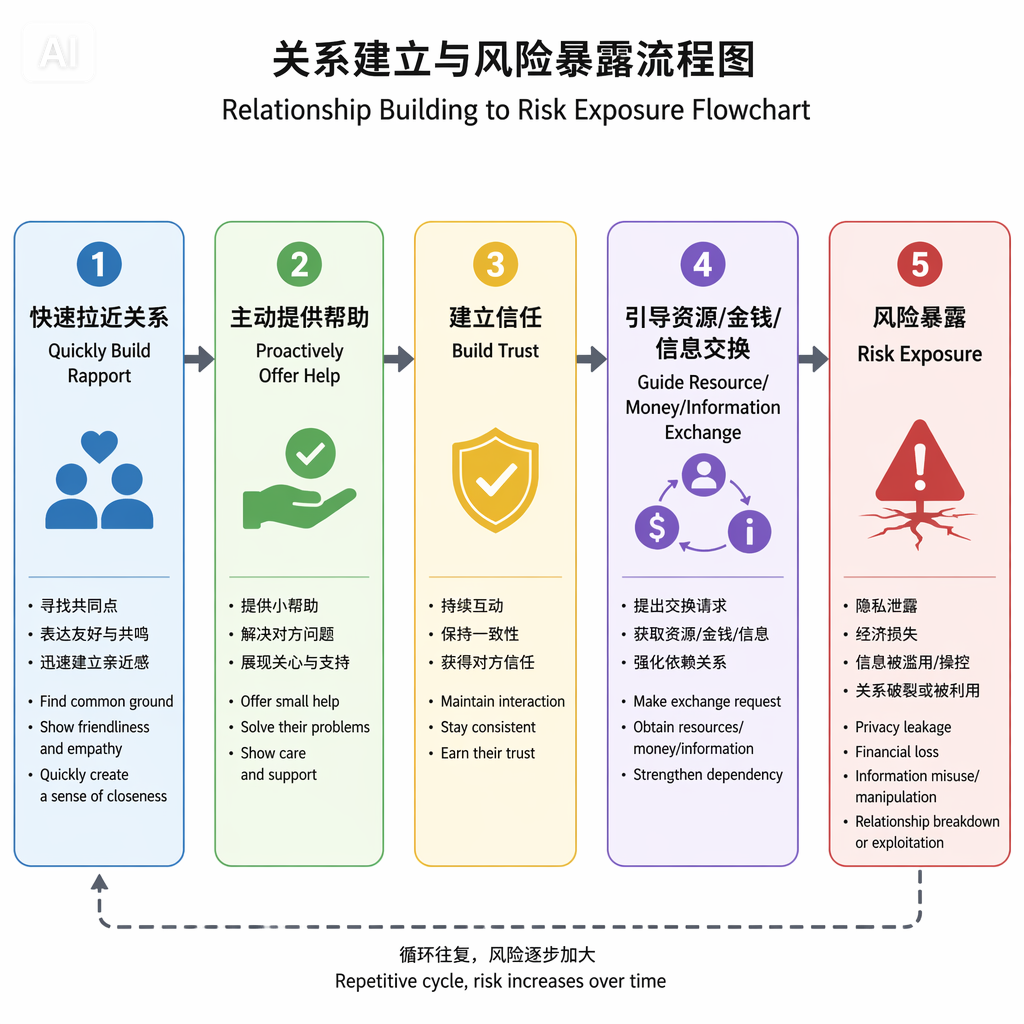
Into this fragmentation arrives the “helpful countryman.” They surface at the airport, in Facebook expat groups, at embassy-adjacent cafes, or through mutual introductions. They speak your dialect, reference your hometown, share your cultural shorthand. They ask nothing in return—initially. They offer to accompany you to immigration, translate at the bank, introduce you to their “reliable” landlord.
The effect is immediate: cortisol drops, oxytocin rises, and your threat perimeter collapses. You have activated what behavioral economists call the in-group trust heuristic—a evolutionary shortcut that assumes shared nationality equals shared interest. Abroad, this heuristic is frequently weaponized.
The Iron Rule
Here is the cold boundary thesis: Abroad, unless dealing with a licensed, regulated professional institution, any fellow countryman who proactively and costlessly volunteers to handle your core challenges has already calculated the hidden price of your exploitation.
This is not cynicism. This is cost-benefit analysis. Legitimate professionals bill hourly. Volunteers with sustained presence amortize their time through extraction. The math is relentless.
Three Classic Exploitation Scripts: How “Helpful Countrymen” Harvest Vulnerability
The following patterns are documented across expat hubs globally. They are presented as archetypal reported tactics—recognizable structures that law enforcement and regulatory bodies have repeatedly flagged, not as universal indictments of any community.
Script 1: The “Fixer” and the Backchannel Bureaucracy Trap
The Persona: The self-proclaimed local veteran boasting “deep backchannel connections with immigration, police, and local elites.” They wear authority like a uniform—name-dropping officials, flashing encrypted messaging apps, referencing “how things really work here.”
The Mechanism: Your visa renewal stalls. Your child’s school placement deadline looms. Your driving permit expires. The fixer intercepts your panic: “Don’t use the official website, it takes months. Give me a cash expedite fee; I’ll text my guy inside.” The fee is substantial but framed as routine. The urgency is manufactured or amplified.
The Reality: The best-case scenario is extortion—repeated “additional fees” for fabricated complications until you refuse or exhaust funds. The worst case involves forged visas, falsified corporate documentation, or counterfeit stamps that leave you unknowingly in violation of immigration law. When border authorities detect the forgery, the “helpful friend” has vanished. You face detention, deportation, or criminal charges while they operate under a new alias. The Information Asymmetry is total: you cannot verify their claimed connections, and you discover the fraud only at enforcement contact.
Regulatory bodies in multiple jurisdictions have issued alerts on unlicensed immigration assistance and document fraud rings targeting newly arrived migrants. Victims may face severe legal consequences regardless of intent.
Script 2: The Arbitrage Mirage and the FinTech “Pig-Butchering” Variant
The Persona: The high-rolling compatriot broadcasting wealth signals—luxury vehicle leases, premium penthouse rentals, social media posts of crypto portfolio growth or “exclusive local real estate arbitrage.” They cultivate aspirational proximity: You could be me.
The Mechanism: They prey on your financial displacement—perhaps you are anchored to a modest EW3 salary structure, or your remote income fluctuates with currency volatility. They offer to “show you the local ropes,” inviting you into gated investment circles, OTC FX-swapping groups, private token pools “not open to locals,” or off-market property pre-sales requiring “insider” capital deployment.
The Reality: These structures frequently map to cross-border Ponzi schemes or money-laundering funnels. The operator weaponizes your ignorance of local banking regulations, tax reporting obligations, and securities law. You may be positioned as an unwitting Money Mule—your account used to layer or integrate illicit funds, your identity associated with structured transactions that trigger financial intelligence unit alerts. Alternatively, you become the final exit liquidity in a fabricated investment, your capital converted to the operator’s gain while you hold worthless tokens or non-existent property claims.
Financial regulators globally, including the Financial Crimes Enforcement Network (FinCEN), have documented pig-butchering and affinity-driven investment fraud as escalating threats. Victims may face account seizure, criminal investigation, and unrecoverable losses.
Script 3: The Domestic Concierge and “Card-Freezing” Off-Ramp Trap
The Persona: The saint-like local guide who drives you to supermarkets, translates at clinics, recommends apartments, remembers your birthday. They become your emotional anchor in displacement—a surrogate family member when actual family is distant.
The Mechanism: Through sustained intimacy, they map your complete financial profile: cash reserves, income sources, home-country banking relationships, family financial dependencies, emotional vulnerabilities. The endgame activates when they propose their “trusted, cheap underground channel” for currency conversion, property purchase, or remittance—bypassing formal banking to “save you fees.”
The Reality: Multiple extraction paths exist. They may collect massive kickbacks from landlords by inflating your rent while presenting themselves as your protector. More critically, they may route tainted or stolen funds through your home-country accounts—using you as an unwitting transit node in layered transactions. When law enforcement traces the illicit flow, your domestic accounts face immediate Card-Freezing or seizure. You discover the trap when your home-country debit cards decline, your credit lines suspend, and investigators request documentation you cannot provide.
The domestic concierge exploits emotional dependency as the entry vector and financial infrastructure as the extraction mechanism. The betrayal is total because the trust was total.
The Core Economics: Why Your Own People Become Your Predators
The Lowest Cost of Acquisition
Fraudsters are rational calculators. Defrauding native locals requires overcoming language barriers, cultural defense mechanisms, and embedded legal protection networks. Defrauding a compatriot expat requires only two cheap levers: shared nostalgia and information asymmetry.
The shared language eliminates friction. The shared cultural references accelerate trust formation. The expat’s isolation eliminates verification pathways—no family network to consult, no long-term local relationships to cross-reference. The cost of customer acquisition approaches zero. The conversion rate is high.
The Anomaly of Proactive Altruism
Consider the business logic of time. Legitimate, premium professionals—licensed attorneys, certified public accountants, registered relocation agents—operate through appointment systems, hourly billing, and formal engagement letters. Their time has transparent market value. They do not hover at airport arrivals. They do not monitor Facebook groups for distressed newcomers.
Anyone delivering sustained, unbilled, proactive assistance must amortize that time investment through later extraction. The margin must justify the hours. The harvest is necessarily aggressive and high-yield. Proactive altruism abroad is a negative market signal.
The Shield: Building an Expat Social Firewall
Rule 1: Commercialization is Security
Always prefer paying premium rates to local, fully licensed, non-native professionals operating through corporate emails, formal contracts, and verifiable regulatory registration. A Thai immigration attorney with a physical office, bar association membership, and published fee schedule is structurally more secure than a compatriot “who knows a guy.” The contract creates accountability. The regulatory body creates recourse. The foreignness eliminates affinity exploitation.
Rule 2: The Exclusion Principle
Whenever an operational matter touches Visa/Status, Capital Flight/Currency Swaps, or Real Estate/High-Value Investments, automatically invoke the Countryman Exclusion Principle. Route these exclusively through institutional channels: government portals, licensed financial institutions, registered property agents with escrow capabilities. No exceptions for “friend” introductions, “insider” access, or “cultural translation” needs.
Rule 3: Deconstruct the Motive
The moment someone’s warmth exceeds normal social boundaries—the unprompted airport pickup, the repeated refusal to accept payment, the insistence on handling your “complicated” paperwork—internally repeat: “Why are they doing this for me? What is the ultimate ROI they are extracting from my presence?” If the answer is unclear, the default assumption is deferred extraction.
Common Risks or Mistakes
Normalizing urgency: Fixers manufacture or amplify deadlines to bypass your verification instincts. Any claim that “tomorrow is too late” demands immediate institutional confirmation, not accelerated cash payment.
Confusing emotional intimacy with operational trust: The concierge who remembers your coffee order can still be mapping your account balances. Separate social warmth from financial exposure.
Underestimating jurisdictional complexity: Cross-border financial arrangements may trigger reporting obligations in multiple countries. “Helping” compatriots navigate these without licensed guidance may expose you to unwitting complicity in regulatory violations.
Over-relying on expat social proof: “Other countrymen use him” is not verification. Fraud networks frequently cultivate reference chains within closed communities.
Ignoring negative market signals: Refusal to provide formal documentation, insistence on cash, operation through personal rather than corporate accounts—these are structural warnings, not cultural quirks.
Key Takeaways
- Affinity fraud expat predation exploits in-group trust heuristics that are neurologically automatic and cognitively costly to override.
- The “helpful countryman” offering uncontracted, unbilled assistance has structurally inverted incentive alignment—extraction is the business model.
- Three dominant scripts—the Fixer, the Arbitrage Mirage, and the Domestic Concierge—map to distinct vulnerability profiles and extraction mechanisms.
- The Exclusion Principle mandates institutional routing for all visa, capital, and property operations regardless of compatriot convenience.
- Commercialization is security: licensed local professionals with regulatory accountability outperform unverified in-group assistance on every risk metric.
- True cross-border solidarity respects legal orbits; those rushing to pull you into unverified inner circles are optimizing their harvest, not your survival.
Frequently Asked Questions
What is affinity fraud in expat communities?
Affinity fraud involves exploitation of trust within shared identity groups—nationality, language, religion, or profession. In expat contexts, perpetrators leverage shared origin, cultural fluency, and newcomer isolation to bypass normal skepticism. The fraud may target immigration status, finances, property, or personal data. Victims often delay reporting due to shame or community pressure.
How do I verify if an immigration fixer is legitimate?
Verify through official government channels: check registration with local bar associations or immigration consultant regulatory bodies, confirm physical office addresses, request formal engagement letters with fee structures, and cross-reference through your embassy’s published resources. Never rely on testimonials from recent arrivals or social media group recommendations alone. Processing times and government procedures may change; always verify current official guidance.
Can I recover funds if my bank account is frozen due to a money mule scam?
Recovery is complex and uncertain. Account freezing typically triggers parallel criminal and civil proceedings in multiple jurisdictions. You must demonstrate lack of criminal intent, which requires extensive documentation and legal representation. Prevention through Exclusion Principle adherence is vastly more effective than post-freeze remediation. Consult qualified legal counsel immediately if your accounts are affected.
Why are fellow countrymen more dangerous than local scammers abroad?
Local scammers face language barriers, cultural unfamiliarity with your risk calculus, and your natural defensive posture as a foreigner. Compatriots neutralize these defenses through shared nostalgia and accelerated trust formation. They also understand your home-country financial infrastructure, enabling cross-border extraction mechanisms like Card-Freezing that local operators cannot execute.
What should I do if a compatriot offers to handle my visa renewal for cash?
Decline immediately. Route the matter through official government portals or a verified, licensed local attorney. Cash payments to unlicensed intermediaries for immigration services carry risks of fraud, forgery, and personal criminal liability. Report the offer to relevant authorities if the individual appears to be operating a systematic scheme. Visa bulletin dates and processing requirements change; verify current procedures through official sources.
Related Reading on SerialExpat
- EW3 visa pathway requirements – legitimate pathway guidance for U.S. employment-based immigration candidates.
Disclaimer
This article is for general informational purposes only and does not constitute legal, tax, immigration, financial, or property investment advice. Laws, government procedures, visa bulletin dates, processing times, tax rules, and local regulations may change. Readers should verify information with official sources or consult a qualified professional. All described scam mechanisms are presented as reported patterns documented by law enforcement and regulatory bodies, not as universal truths or confirmed operational playbooks.